Events

Rateb
Salary Increases A Syrian Regime Policy Driving the Militarization of Society
Executive summary
- There is a prevailing pattern in salary increase process in syria along two main trends: Pricees of subsidized basic goods are increased by the regime’s government and soon after the head of the regime increases salaries, or vice versa, so that when salaries are increased by the head of the regime, then the government increases the prices of goods. In both cases the price of basic goods or salary increases happen within a very short time frame.
- Salaries reached their peak against the dollar in April 2011, before shrinking against it despite the successive increases in salaries. Today, salaries have reached lowest levels against the dollar since 2000.
- Salary increases were decided in equal proportion between the civil and military sectors until 2018 when Bashar al-Assad exclusively increased the salaries of army soldiers several times, while civilian salaries were not increased.
- Salaries are shrinking compared to the cost of living, as the minimum salary of 92,970 Syrian Pound is barely enough to cover expenses three days a month due to the deteriorating economic conditions in the country.
- Salary values denominated in dollars indicate a clear impact of the Lebanese banking crisis that began in 2019. This crisis was reflected in the depreciation of the value of the Syrian Pound against the dollar, and thus the value of salaries.
- The salary increase policy is one of the leading factors in the further militarization of society, by pushing young people to join the military or join militias and become mercenaries operating both inside and outside the borders of the country. This became an additional factor driving migration.
- The salary increase policy was adopted by the regime because it needed to motivate large groups of people to join official military institutions or militias. That is done by ensuring that the salary of the lowest ranking soldier in the military sector is greater than the salary of the highest income earners in the public sector.
Introduction
The problem of syria's public sector salaries, both civilian and military, is one of the chronic problems with historical roots extending back half a century. During the era of Hafez al-Assad, public sector employees experienced long consecutive years of deterioration of the value of their salaries as a result of the government’s economic policies, which continued into the era of Bashar al-Assad. This was despite his "attempts" to improve the living conditions of public sector employees at the expense of supporting other sectors such as agriculture and industry.
The difference between the salaries of civilians and the military personnel was of little importance, as the overall goal was to pay attention to the salaries of the public sector as a whole, including the military. However, developments since 2011, have shed light on the various aspects of the state, including how it disperses salaries. However, until now the information has not yet been properly detailed nor has a proper comparison that accurately assesses the differences in civilian and military salary increases in Syria been attempted.
Civilian public sector salaries are determined based on the state’s basic labor system(1). while military salaries are determined based on the Military Service Law for army soldiers(2),and the Internal Security Forces Service Law for members of the Internal Security Forces. Their executive instructions are issued by the Commander-in-Chief for the army and armed forces(3).
Historically, salary increases were issued by legislative decrees from the head of the regime during both the eras of Hafez and Bashar al-Assad. Salary increases have never been issued by the relevant state institutions; nor have there ever been any successful calls or pressures to increase salaries; neither the parliament nor the trade unions have any role since they were under direct command of Hafez al-Assad in the 80’s.
Salary increases have always been associated with an increase in the prices of basic goods; the prices of which are set by the government. These increases also included an increase in equal proportions in both the civilian and military sectors. As for the increases that took place after 2011, they came as a result of the increase in inflation and the decrease in the exchange rate of the Syrian Pound. The latter were accompanied by steady increases in the prices of basic goods in light of the deteriorating living conditions.
By 2018, military salaries were raised exclusively without any relation to increases to civilians in the public sector. In some cases, only certain groups of military personnel received raises while others were excluded. In addition, a pay gap started to appear in favor of military personnel over the Internal Security Forces even though by law they had an equal salary scale. The Internal Security Forces’ suspicions were not in vain since a legislative decree contained in Article 87 of the Military Service Law annulled the current salary scale and replaced it with a new scale that includes higher salaries without being determined by a specific percentage.
This paper assesses all public sector salaries in Syria starting in 1994, the last year in which salaries were increased by Hafez al-Assad, until 2022. The paper analyzes the trends of increases in general to detect patterns in the policy approaches of the regime regarding salary increases between the civilian and military sectors; to provide a comparison of civilian and the military salaries, find their values and what they are equivalent to in dollars according to the central bank and the black-market rates, as well as the value of income taxes imposed on them. The paper provides an interactive tool that helps make comparisons between different salary categories in the Syrian Pound and the US dollar, through the use of quantitative analysis tool, relying on official sources and mathematical equations to reach the value of salaries and ensure their validity(4).
Salary Increases Since 1994
It is customary in Syria for public salaries to be raised biennially, at a rate of 25%, while the inflation rate exceeded 30% annually - before 2011. Thus, workers and employees lose 17% of the value of their salaries annually as a result of the decline in the purchasing power of the Syrian Pound(5). The last increase in salaries during the era of Hafez al-Assad was executed through Legislative Decree No. 3 of 1994 (6). There were no more increases for six years until after the succession of power by Bashar al-Assad in 2000. By that time salaries steadily eroded, and their proportion in the national GDP decreased. The state sought to stabilize salaries and wages through a clear policy to reduce the volume of aggregate demand on the one hand; and to reduce costs through a policy of cheap wages on the other hand.
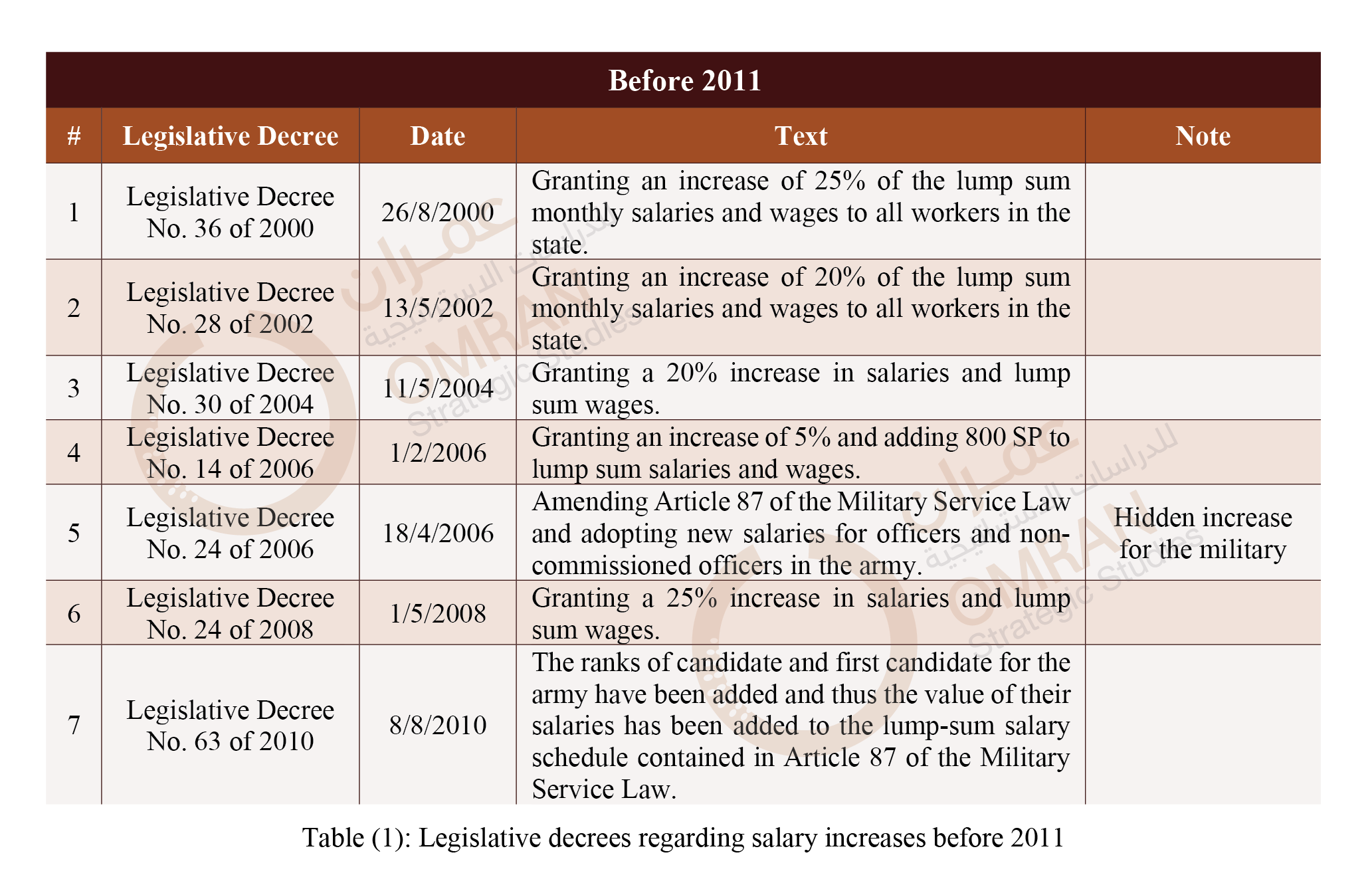
Less than two months after the succession of power, Bashar al-Assad issued the first salary increase since 1994, in an attempt to send a clear message that "economic recovery is near and that the state of economic stagnation from 1995-2000 has ended". However, the salary increase policy remained the same as before, salaries were increased approximately every two years, except for the period between 1994-2000. During the period between 2000 and 2010, 7 legislative decrees related to salaries were issued. Some of the increases included the entire sector of state workers; while other increases were specific to the military - as explicit increases - such as amending their salary schedule, or a special case like re-working at the rank of Candidate and 1st Candidate. (Murashah)
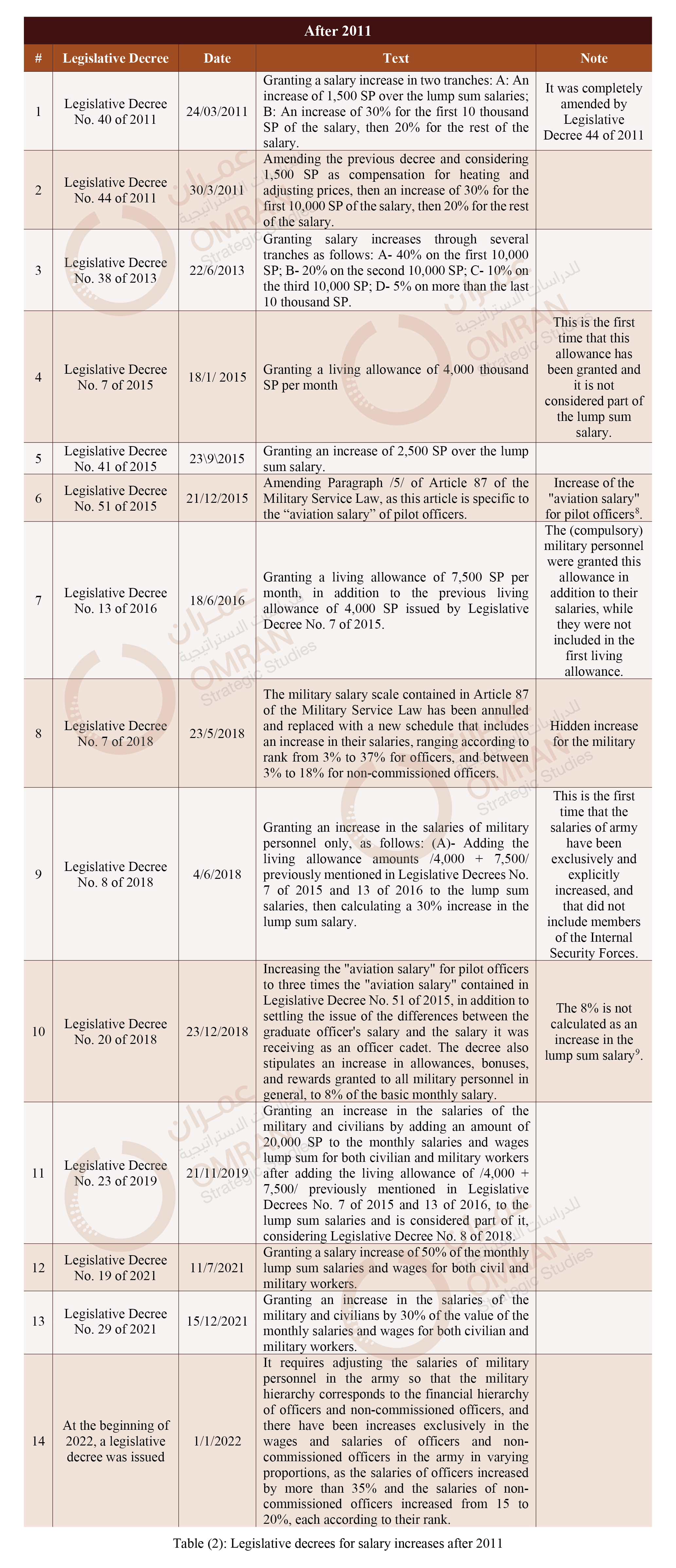
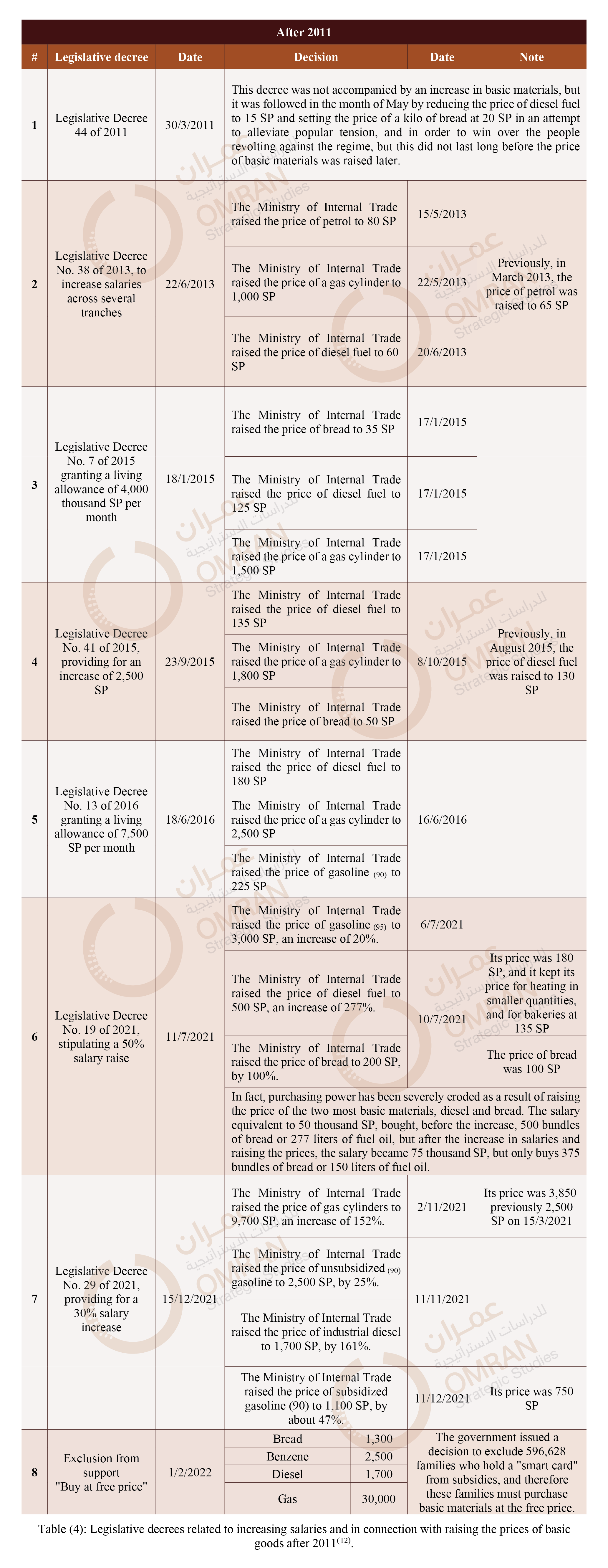
On the other hand, there were a greater number of legislative decrees related to salaries during the period between 2011-2022. 14 legislative decrees have been issued since March 2011. some of which included exclusive increases for the military. The period after 2011 witnessed double the number of legislative decrees related to salaries compared to the previous period; in an attempt by the regime to bridge and repair the gap between the price of the Syrian Pound and the US Dollar. The following table shows the referenced legislative decrees and percentages of salary increases from 2000 to 2022(7):
A Reading of Salary Increases Methods and its Effects
The regime used a method of indirect taxation to finance the increase in salaries and wages. Taxes on petroleum products, cement fertilizers, and mineral oils are increased under a pretext of “price differences” As aresult, the price of basic goods and services. increases and become less competitive in domestic and regional markets(10) .
This general pattern in the increase of salaries and wages closely coincides with a rise in the price of basic goods, an economic pattern prevailing for decades. However the rising price of basic goods and services is not always accompanied by an increase in salaries and wages, as the regime's government may raise the price of basic materials several times before salaries and wages are increased. This indicates “ adeep economic flaw” in the state management of the industrial and manufacturing sector. These unrealistic increases attempt to control prices, and encourage inflation as well. The following are salary increases that coincided with a rise in the price of basic goods: 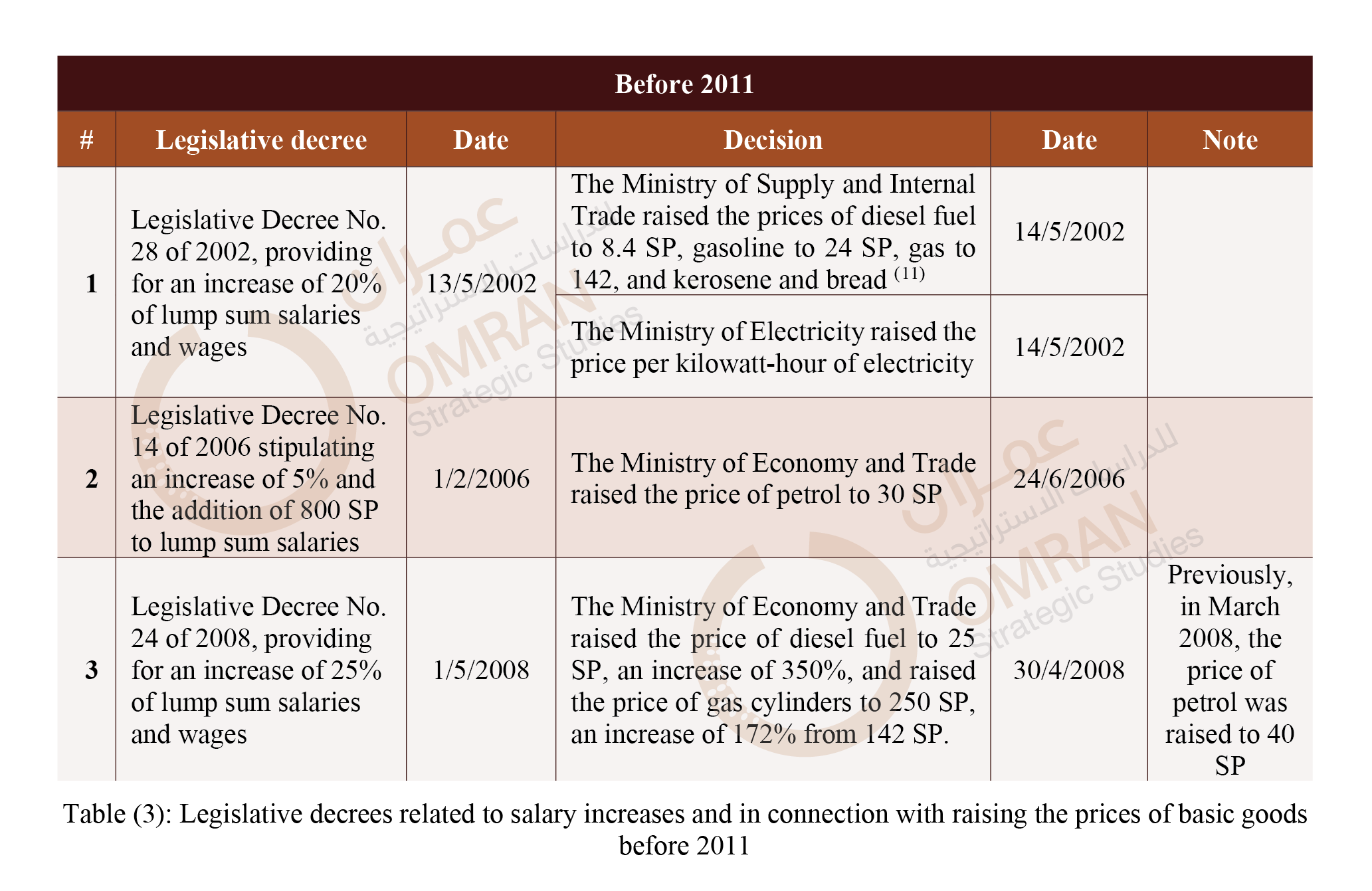
Comparing Civilian and Military Salary Scales
2018 was the first time a major change in the balance of salary increases appeared.between civilian and military public employees For the first time a legislative decree was issued including an explicit increase in the salaries of army soldiers excluded other public sector employees, including the Internal Security Forces.(police) Those increases came as a reward for the military’s efforts in preventing the fall of the regime in the face of the revolution. It was also an attempt to equate the salaries of the military to the salaries granted by militias to its members. Making a comparison between salaries and privileges of different armed factions in the state pushed society further towards militarization and encouraged civilians to join militias or the military institution (13). People preferred salaries granted by militias because they are greater than those officially granted in the state military institution. The salaries of the latter are greater than those of the civil sector, noting that there are official and unofficial privileges granted to members of the army, armed forces, and militia members that increase their total monthly income. It is a common misconception that the exclusive salary increases for military personnel in 2018 was a result of a Russian request, but instead stems from the regime’s need to militarize society. (See the appendix for the salaries of employees in the state including public and military sectors; and the internal security forces in the period between 1994 - 2022)
The comparison is between civilian and military personnel at entry- level pay scale and between the highest category among a civilian employee that hold a Ph.D degree and the starting scale of military personnel, (soldier).(14)The reasons for this comparison are due to two things: The aforementioned salaries are the start-up salaries, i.e., the salary of a Ph.D degree holder cannot be compared with the salary of a Captain ranking in the army, because a captain has 10 years of experience in public service. The differences between the salaries of these two categories are limited, however, there is a preponderance of military salaries over civilians of the same entry level scale(15).
A) Based on the Syrian Pound
It is noted that the gap in Syrian Pound between entry-level salaries of a soldier(rank: private) and a civilian holding a Ph.D degree has declined even further after 2011 until it became very small following Legislative Decree No. 8 of 2018. The percentage of the difference between the salaries in both categories in 2000 was 236% in favor of a civilian whth a Ph.D degree holder’s salary. This percentage fell to 178.9% in 2011, and reached 1.9% in 2022. This is assumes counting gross salaries before income tax is calculated.
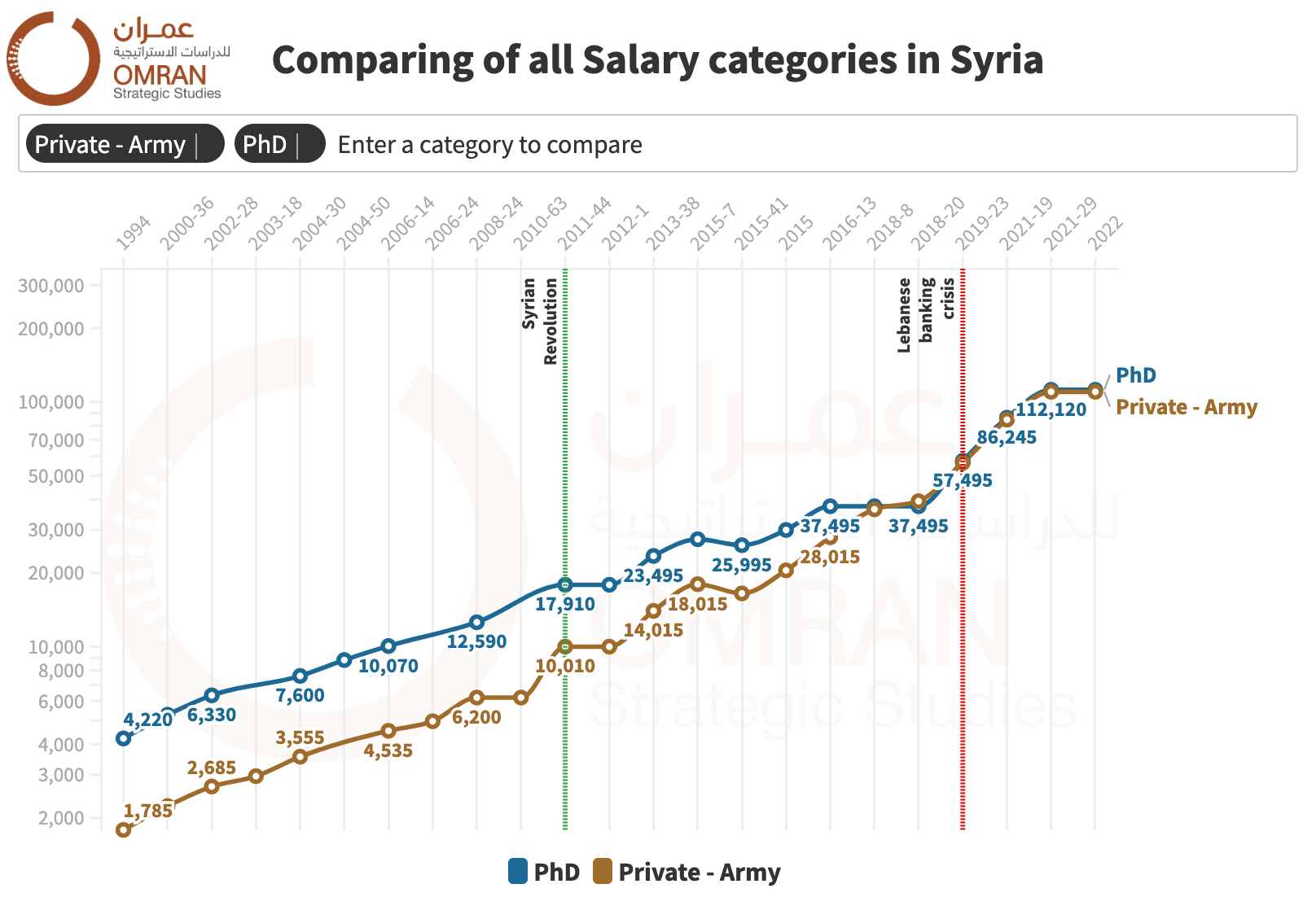
Figure (1): Comparison of salaries according to the Syrian pound for both doctoral and soldier ranks
B) Based on the US Dollar
prices of goods and services are often indexed on the US dollar and converted to syrian pound at the time of contracting . salaries reached their peak value in US dollars by the end of March 2011, after the issuance of Legislative Decree No. 44 of 2011, coinciding with the beginning of the Syrian revolution. In the meantime, the price of the dollar was equal to 47 SP according to the official exchange rate and 52 SP according to the black-market price(16). Later, with the declining value of the Syrian Pound, the salary value against the dollar gradually declined, as the successive increases in salaries from March 2011 to 2022 could not prevent this decline or even flatten its loss in value against the US dollar at the very least. It is also noted that the Lebanese financial crisis in 2019 affected the SP, which led to a further decline in the value of salaries on the basis of the dollar.Starting salaries for Ph.D holders, when measured in dollars between 2000 and 2022, shrank by a very large percentage, approximately 360.8%. While the salary of a soldier witnessed only a 156.3% decline in starting salaries during the same period due to the consecutive increases of exclusively military salaries.
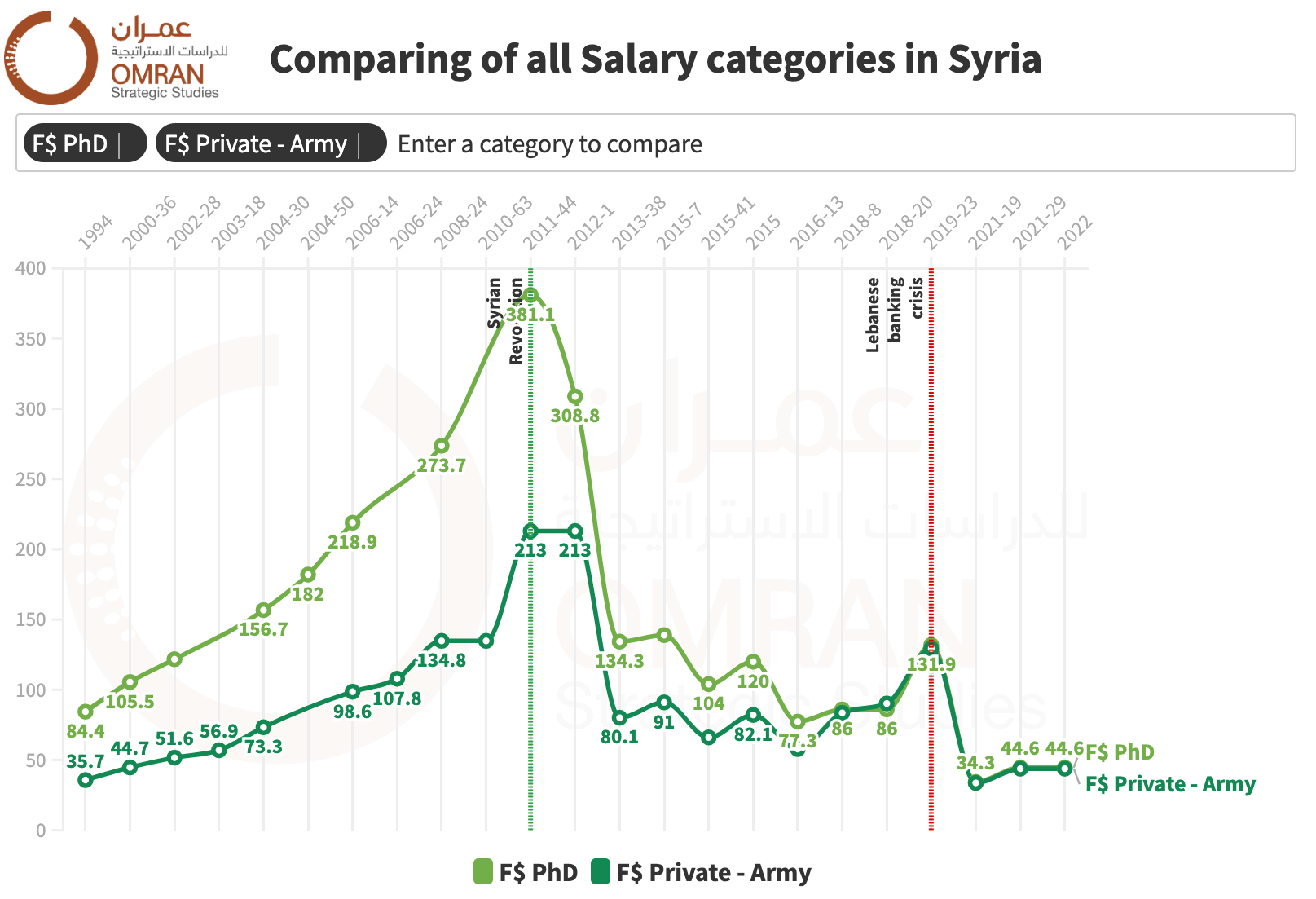
Figure (2): Salaries are denominated in dollars, according to the official rate from the Central Bank
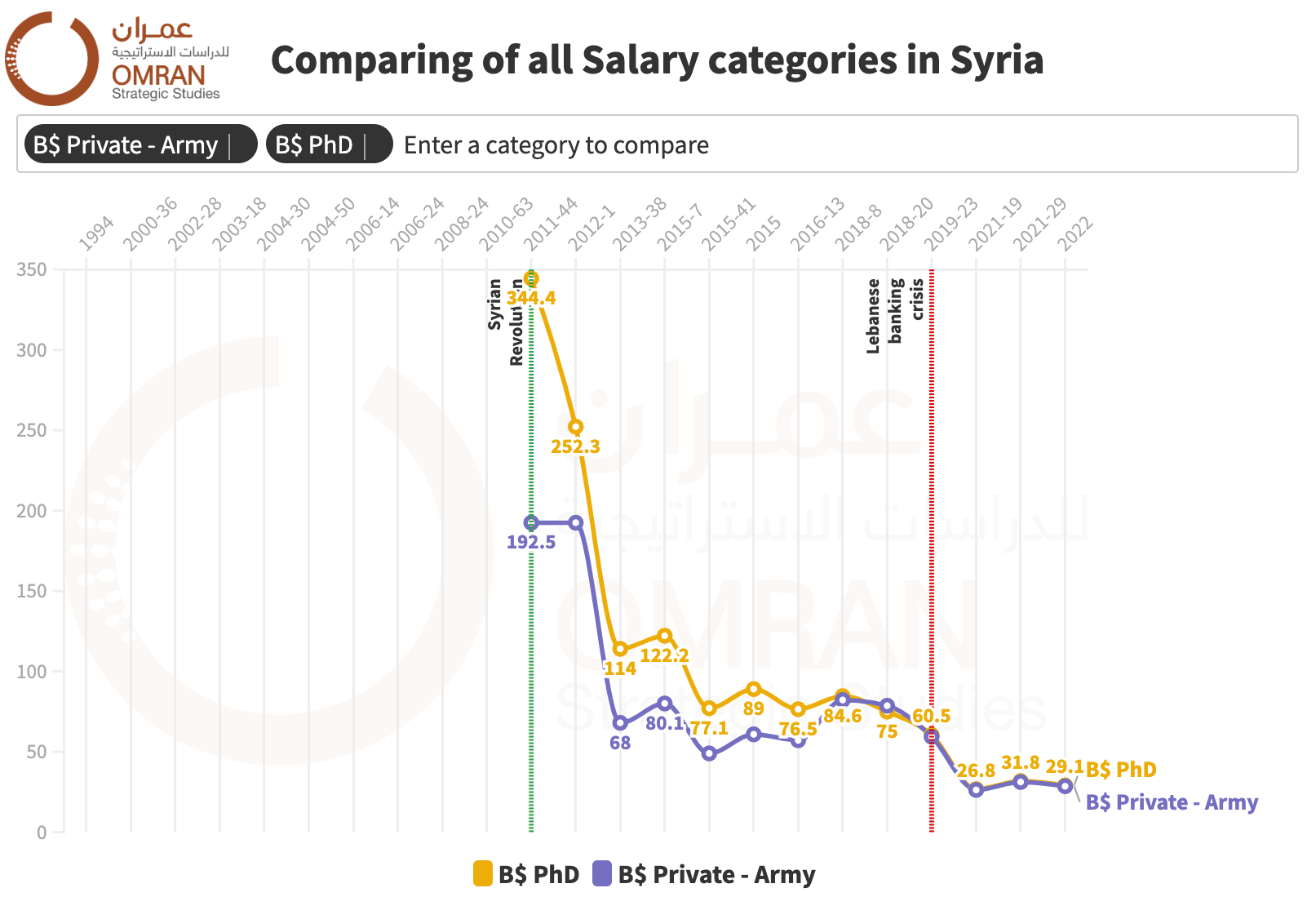
Figure (3): Salaries are denominated in dollars according to the black market
Note:The following interactive Chart provides comparisons between the different salary categories, with each other, and with the Syrian pound and the US dollar
Income: Tax collection and Military Exemption
The income tax law has undergone several amendments since Bashar al-Assad came to power. In 2001, he issued Legislative Decree No. 8 exempting the first 1,000 SP of the monthly salary from income tax. Later, the first 5,000 SP of the salary was exempt from income tax under the new income tax law No. 24 of 2003. The income tax law was be amended several times, the most recent of which was Legislative Decree 24 of 2020(17), which included an exemption of the first 50000sp of the salary from income tax by amending Articles 68 and 69 and abolishing Legislative Decree 46 and 48 of 2015.
The main point here is that the income tax law exempted, in Article 67, “military personnel of the armed forces, members of the internal security forces and firefighting personnel,” in addition to other categories, from income tax. This was not applied to public and private sector employees. Legislative Decree No. 18 of 2003, which includes the Article 81 of the Military Service Law, confirmed that military personnel benefit from a set of exemptions, including exemption from income taxes and various compensations and allowances. Legislative Decree No. 1 of 2012, which includes Article 155 of the Internal Security Forces Service Law, gave the Internal Security Forces the same exemptions granted to army soldiers. Thus, if the starting gross salaries of both a Ph.D holder and the lowest ranking soldier in the army are compared before and after-tax deductions, we find that the net salary of the soldier is greater than the net salary of a Ph.D holder(18): 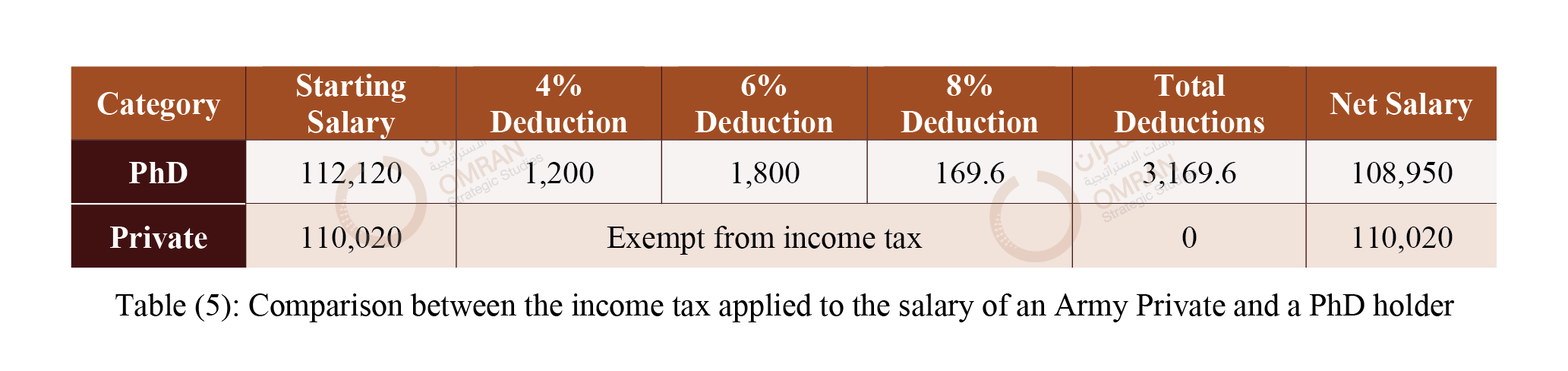
Salary Increases and the cost of the cost of Living According to cost of living
figures in Syria provided by the "Kassioun Index" consistently for many years, current salaries do not cover the expenses for three days of living(19). The cost-of-living index in September 2022 for a Syrian family consisting of five members reached 3.6 million SP,This is an unprecedented rise during a record period that threatened millions of Syrians who live in a catastrophic widening gap between the cost of living and the minimum salary for an entry - level public employee.The biginning monthly salary scale remains at the threshold of 92,970 SP (less than half the cost of the minimum monthly nutrition needs per worker alone)(20).This economic reality has left 90% of Syria’s population living below the poverty line; many of them forced to make very difficult choices to cover their expenses(21)The cost of living over the years compared with the minimum salary is illustraated the following figure:
Conclusion
Public sector employees do not depend solely on their salaries, which are barely sufficient to cover the cost of living for several days. Instead, they depend on various sources of income, such as financial transfers coming from abroad, or having a second job in the private sector. In addition, their supplemental income may be sourced in illegal forms of income as a result of financial corruption and bribery in government offices and institutions. As for the military, despite their salary increases, they have alternative sources of income, all of which are illegal; through looting, extortion, racketeering, and checkpoint taxes; Additionally, financial corruption related to purchases, contracts, and tenders of the Ministry of Defense that are supervised by procurement committees in military units are carried out in an exclusive manner only benefiting specific groups of officers and non-commissioned officers.
The foregoing is nothing but a natural product of a dictatorial state that puts all its resources at the service of its own military machine. It does not work to create a well-developed civilian state. It is a product of a country torn by war waged by the regime against the Syrian people. The regim's salary increase policy can be summarized as follows:
- A policy that incentivize the militarization of society and the transformation of military duty into a profession like any other profession. This was done through contracting with civilians or military personnel as mercenaries within the militias or sending mercenaries to areas of armed conflict under Russian supervision.
- Creating a repellent unstable environment:
- The policy led to increased migration waves , especially by educated classes, because even those who have higher degrees in the public sector are unable to make more money than the starting salary of the lowest grade military personnel that has an elementary school education. The regime’s message to young people is, “Don’t learn, go and work in the army.”
- The regime’s policy also aimed to send young people abroad in order for them to send remittances to their families later. Thus, the regime benefits from the foreign exchange transferred to the areas under their control in addition to these young people paying huge sums of money in order to be exempt from compulsory or reserve military service, which costs each person 5-10 thousand dollars as a fee according to the type of military service and the duration of their stay outside the country.
This policy is a warning to countries hosting refugees, given that returning them to regions controlled by the regime, while taking their safety into account, will force the majority of them into the predetermined fate of “engaging” in the military institution or joining an armed militia. The reality is that working in such jobs in the military sector is the only promising career option for young Syrians in regime-controlled areas.
Appendix: Salary Scale in Syria
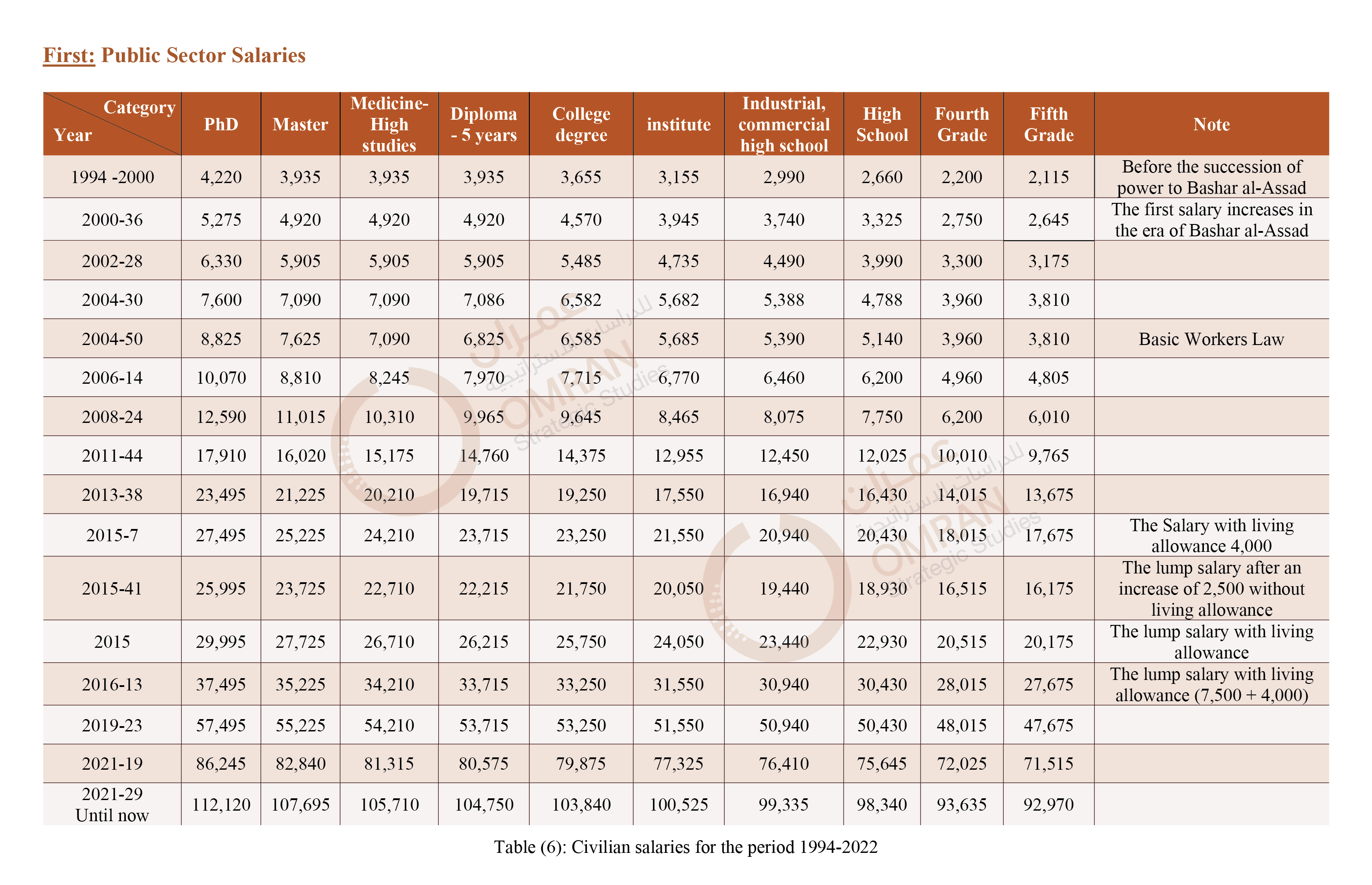
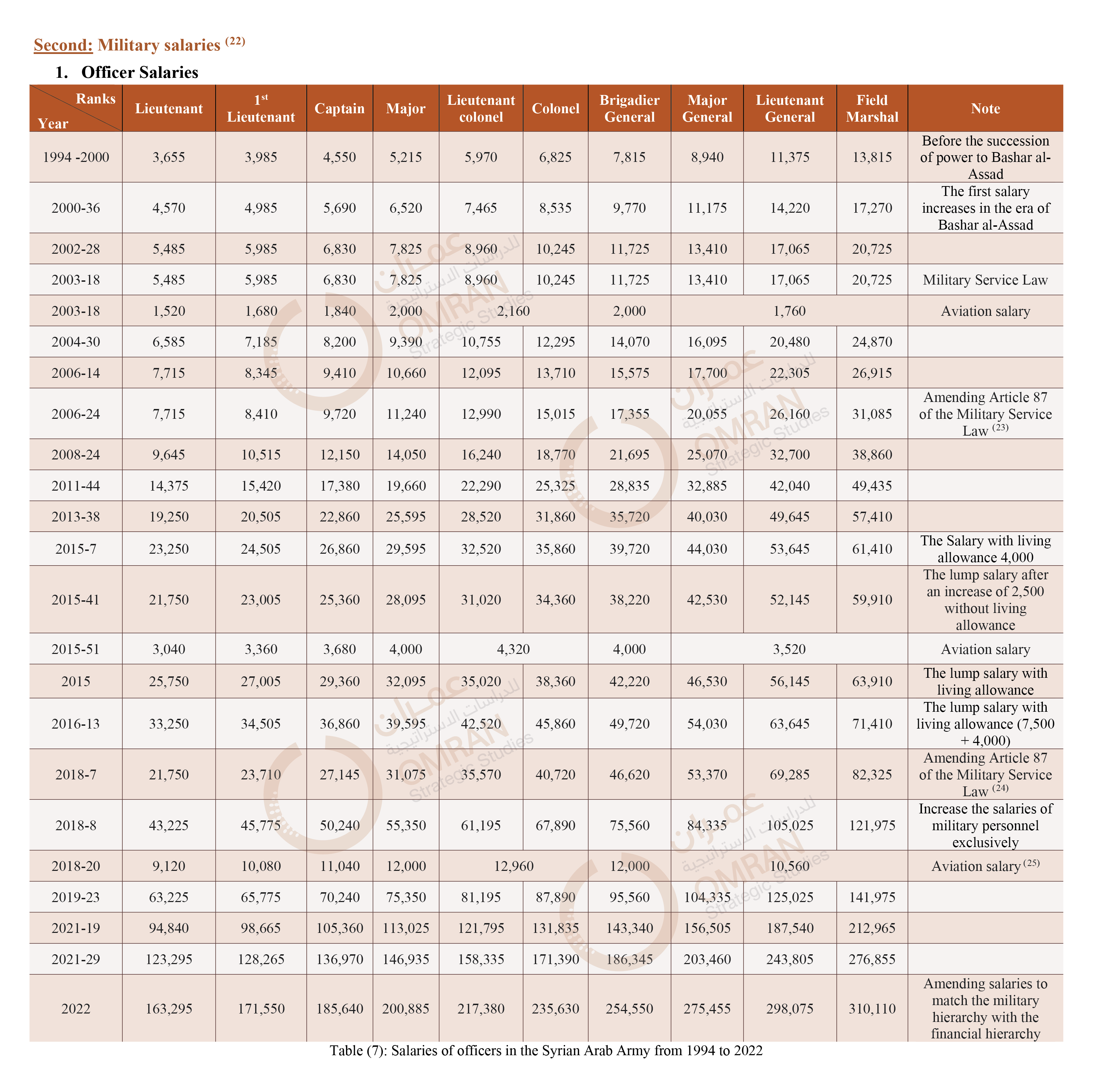
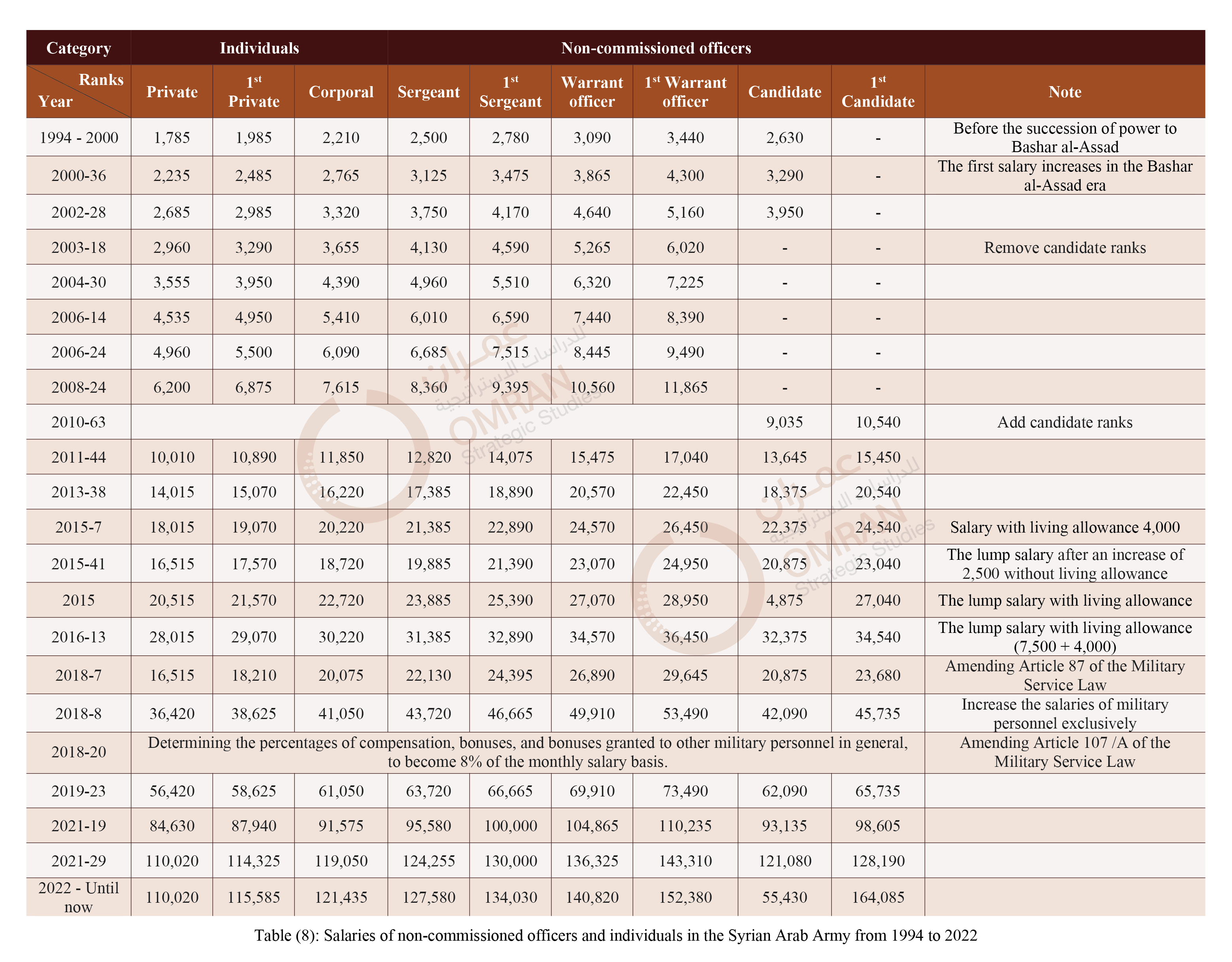
The following is the salary scale for civilians, military personnel, and internal security forces, starting from the last increase during era of Hafez al-Assad in 1994 until 2022:
2- Salaries of Non-commissioned Officers and Individuals
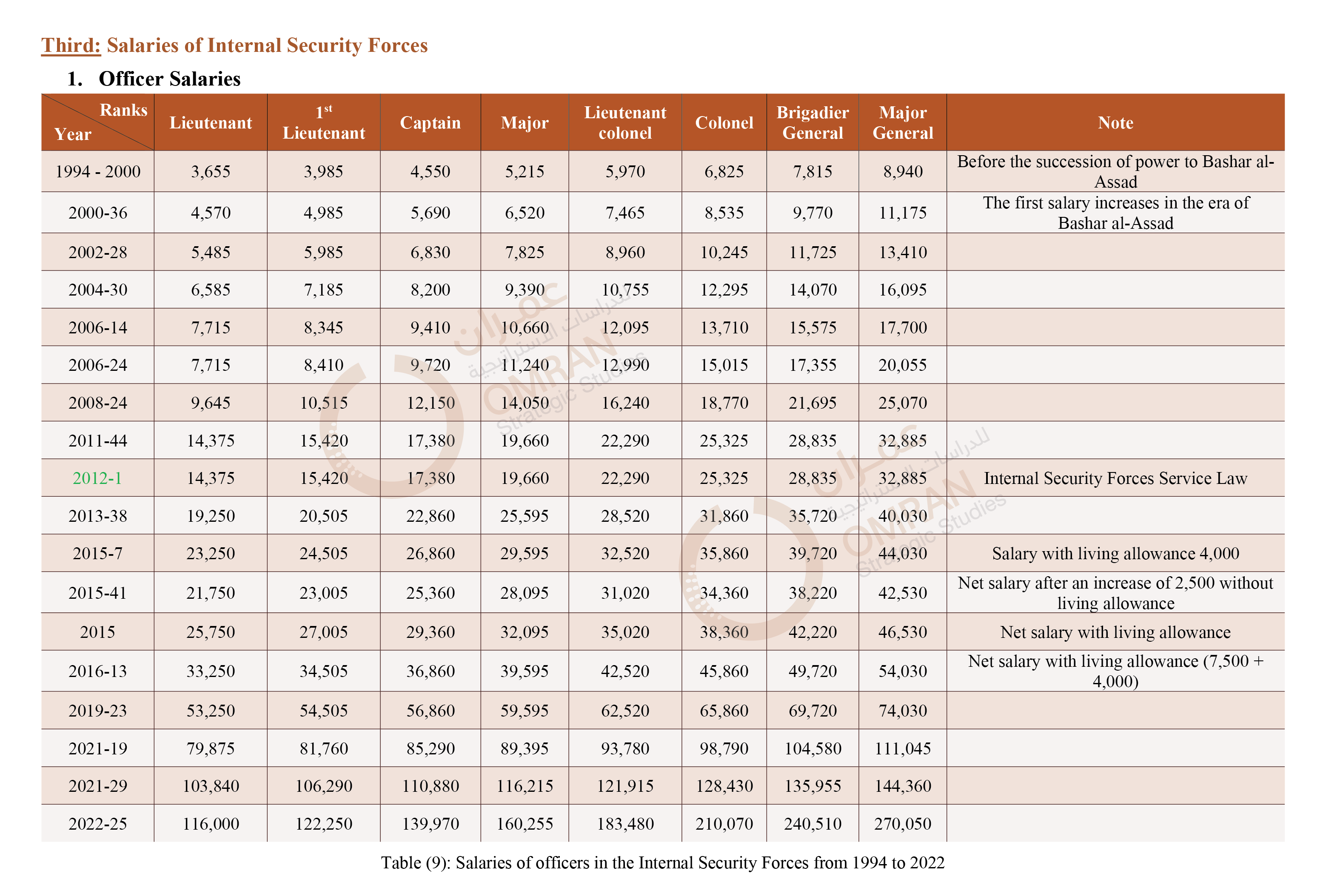
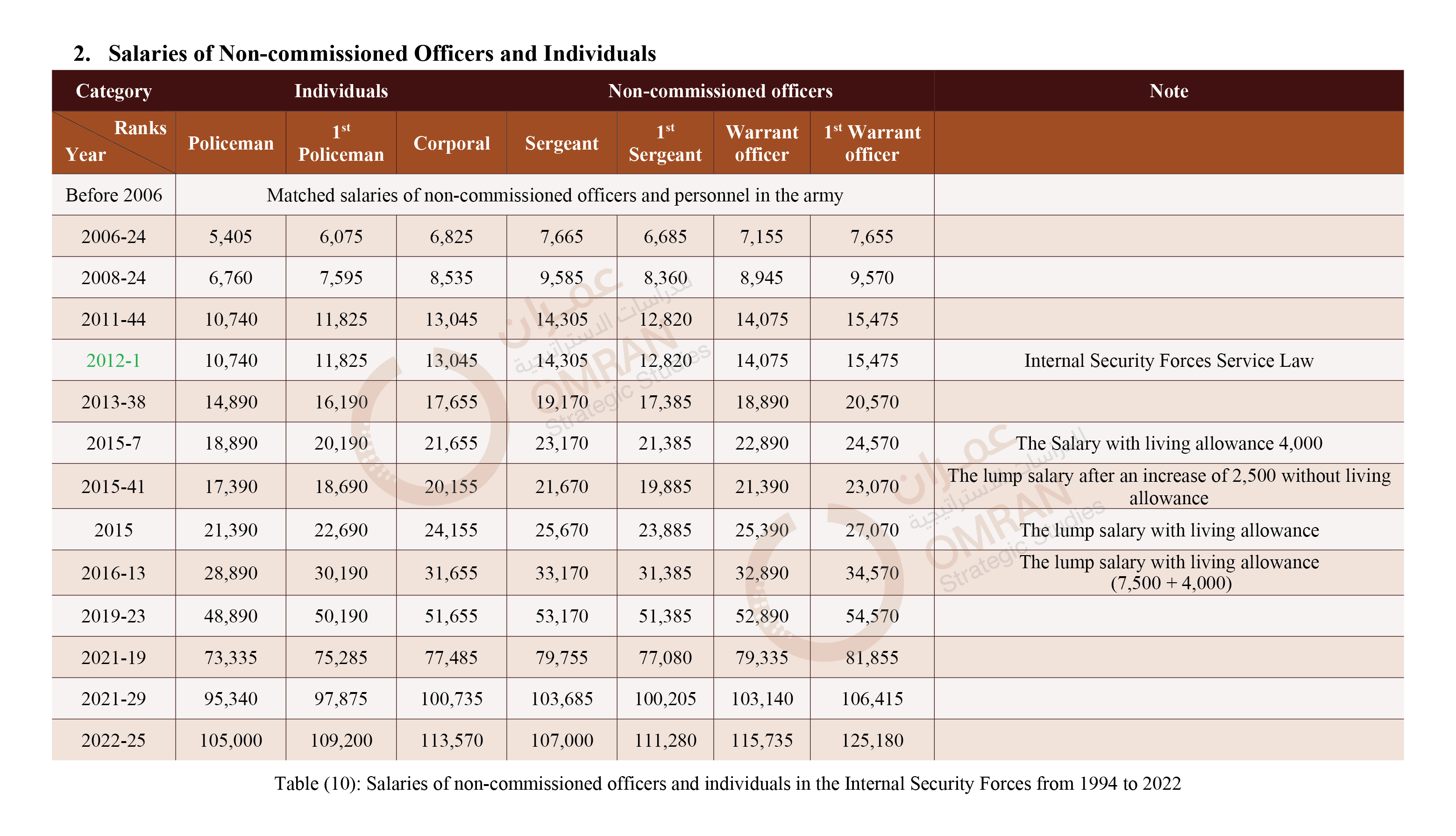
Note:
- During the translation of this paper into English and after the publication of the Arabic version of this paper in mid-November, Bashar al Assad issued Legislative Decree 25 of 2022 on December 27, 2022, that includes an increase in the salaries of the Internal Security Forces (police). This modification is included in the English version only.
- From mid-November to the end of December, the ex-change rate of the Syrian Pound was dropped from 5,200 to 7,300 SP against the US dollar.
Exchange Rates Between Official and Black Market
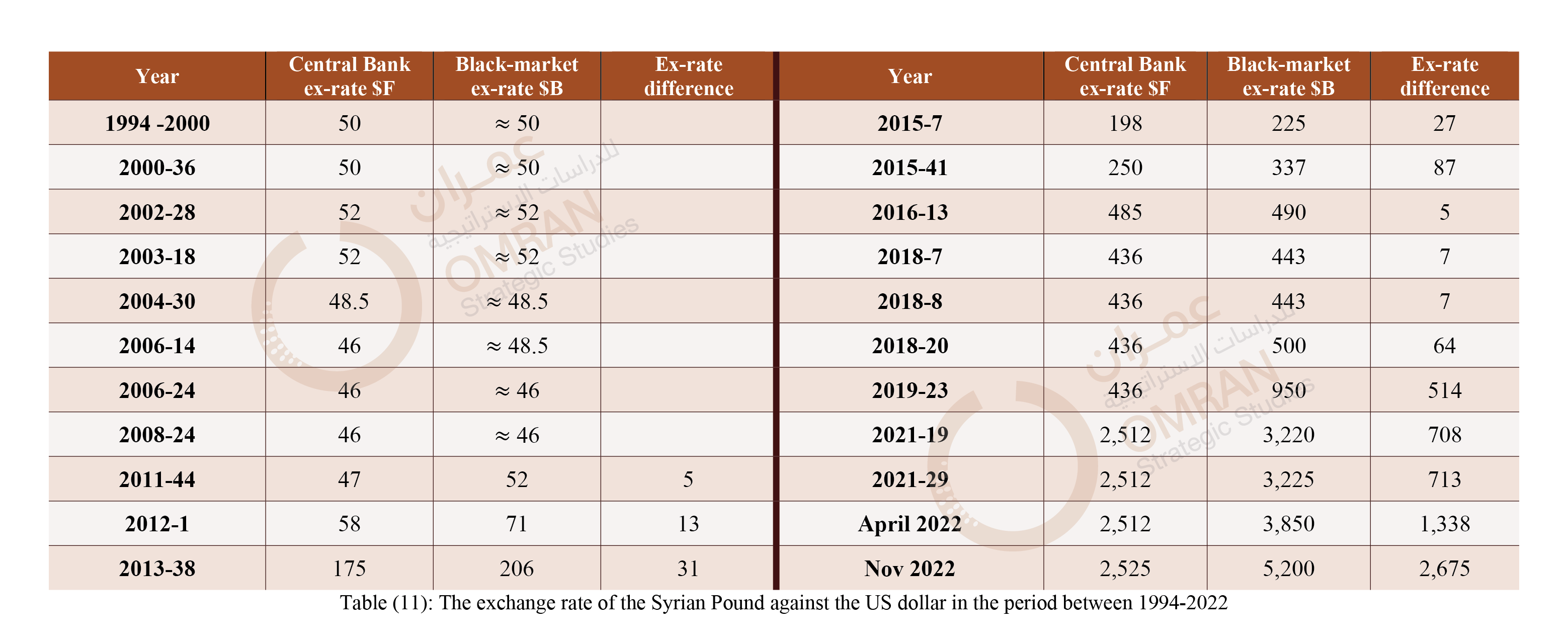
The exchange rates against the dollar were almost constant before 2011. Later, they began to vary with the passage of time, and a real difference began to appear between the exchange rate of Pound, according to the central bank, and the black-market rate. The Syrian Pound has lost its value against the dollar exponentially since 2011, and this has negatively affected the purchasing power, in addition to the increase in inflation rates. It is noted that the gap between the exchange rate of the Pound according to the central bank and the black market is relatively increasing steadily(26). The following are the exchange rates of the Pound against the dollar on the date of the issuance of the legislative decree to increase salaries.
(1) “Law 50 of 2004, the basic system for workers in the state”, Syrian parliament, date of publication: 06 December 2004, date of access: 20/10/2022, link: https://bit.ly/3hqpqbF.
(2) “Legislative Decree No. 18 of 2003, Military Service Law”, Syrian parliament, published: April 21, 2003, Accessed: 14/01/2022, Link: https://bit.ly/3GyL0Cq.
(3) “Legislative Decree 1 of 2012, Internal Security Forces Service Law”, Syrian parliament, date of publication: January 2, 2012, date of access 16/05/2022, link: https://bit.ly/3lbG5hA.
(4) One of the mathematical equations used to calculate salaries after Legislative Decree 44 of 2011: where (J7) refers to the salary value in 2008: =CEILING(IF((J7+1500)>10000;((((J7+1500)-10000) * 20%)+(10000*30%))+(J7+1500);((J7+1500)* 30% +(J7+1500)));5)
(5) Ali Kanaan, “Stagnation in Syria”, Mafhum website, link: https://bit.ly/3Cocmdu.
(6) Legislative Decree 3 of 1994 issued on 30/4/2000, which includes granting an increase of 30% from the monthly lump sum salary or wage to the lump sum monthly salaries and wages for both civil and military workers in the state.
(7) Legislative decrees do not include increases in pensions.
(8)“Aviation salary” is an additional salary allocated to pilot officers, added to the lump sum salary and not considered part of it. It was mentioned in Article 87 of the Military Service Law, Ibid.
(9)The amount of 8% granted to the military is not an increase on the basic salary, but rather a determination of the number of allowances, bonuses and rewards on the basis of the monthly salary, and it constituted a mistake in this regard when it was published.
(10) Ali Kanaan, Ibid.
(11)The name of the ministry changed several times after 2000.
(12)The prices of basic materials that coincided with the increase in salaries were monitored, without tracking all the increases in the prices of those materials that were constantly rising without there being an increase in salaries.
(13 ) Muhsen AlMustafa: “The Comparison between Militias and the Army: Indicators of an Increase in Mercenaries,” Omran Center for Strategic Studies, publication date: October 06, 2022, access date: 20/10/2022, link: https://bit.ly/3DiG3gy.
(14) The rank of soldier in the army is granted to those who volunteered based on a basic education certificate.
(15 ) The interactive tool included on the website enables the user (reader) to carry out the comparisons he wants for all military classes and ranks in the appropriate manner.
(16 )The exchange rate according to the central bank is indicated by $F, while the exchange rate according to the black-market is indicated by $B.
(17) Article 68:
A: The tax rate, including national defense additions, school fees, the municipality’s share, and the cash contribution to support sustainable development, is determined as follows:
| 4 % of the part of the monthly net income that falls between the exempted minimum and 80,000 SYP. | 12 % of the part of the monthly net income between 170,001 and 200,000 SYP. |
| 6 % of the part of the monthly net income between 80,001 and 110,000 SYP. | 14 % of the part of the monthly net income between 200,001 and 230,000 SYP. |
| 8 % of the part of the monthly net income between 110,001 and 140,000 SYP. | 16 % of the part of the monthly net income between 230,001 and 260,000 SYP. |
| 10 % of the part of the monthly net income between 140,001 and 170,000 SYP. | 18 % of the part of the monthly net income that exceeds 260,000 SYP. |
B: The tax rate is set at 10% for each gross payment.
Article 69: A tax-exempt minimum of 50,000 SP per month shall be deducted from the net income.
(18 ) Compensations and bonuses were not calculated for both categories, given that the focus is on gross salaries and income tax.
(19 ) Kassioun Index: A cost-of-living index issued periodically by Kassioun magazine affiliated with the Popular Will Party headquartered in Damascus.
(20 ) “3.5 million, the average cost of living for the Syrian family at the gates of winter,” Kassioun Magazine, date of publication: September 26, 2022, access date: 1/10/2022, link: https://bit.ly/3fN2SBl.
(21) “Griffiths to the Security Council: 90% of Syrians live below the poverty line,” Al-Jazeera Net, date of publication: October 28, 2021, date of access: 25/03/2022, link: https://bit.ly/3RUnLaK.
(22 ) The salaries of the army include the salaries of the first grades only, as each rank has a salary grade to which the military personal is promoted while he remains in the rank for a certain period.
(23) Hidden increase for the military.
Syria along
Early Economic Recovery in NE Syria in the First Half of 2022
Executive Summary
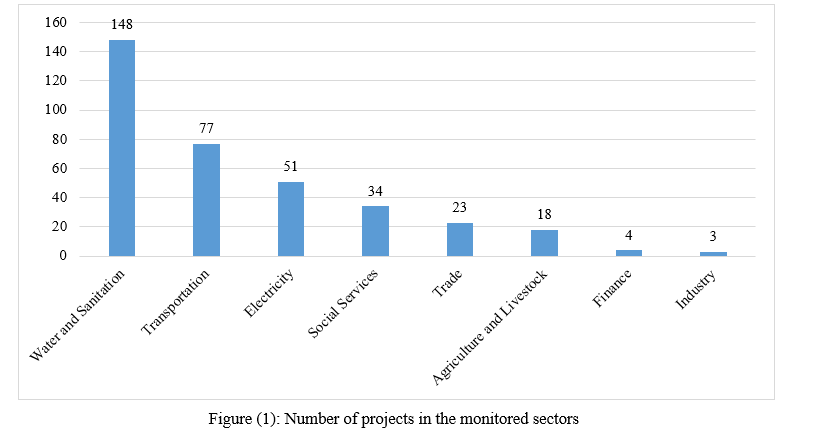
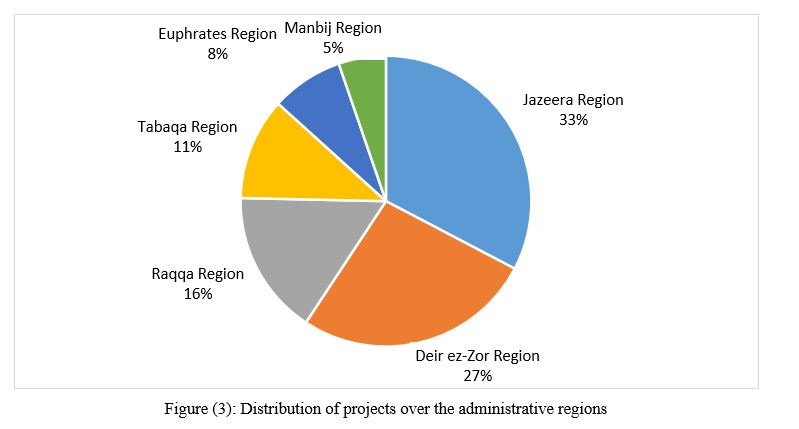
- During the first half of 2022, 358 projects were implemented in Northeast Syria region. The water and sanitation sector topped the list with 148 projects, followed by transportation 77 projects, electricity 51 projects, social services 34 projects, trade 23 projects, and agriculture and livestock 18 projects. The distribution of the projects according to the administrative districts included the following: al-Jazeera Region 118 projects, Deir ez-Zor Region 96 projects, Raqqa Region 58 projects, Tabqa Region 41 projects, the Euphrates Region 29 projects, and Manbij Region 19 projects.
- Several administrative decisions by local authorities were issued during the monitoring period of this report. This included a decision banning the transport of wheat within the Autonomous Administration's regions without an official authorization letter issued by the “Administration”, fixing wheat prices at 2.200 SYP/Kg, limiting the quantity of diesel allocated per household to 300 liters/month at a price of 150 SYP/liter, and granting 100,000 SYP to every public employee in the region.
- The areas under the control of the Autonomous Administration suffer from severe crises in all sectors, which has led to the increase of monopolies, spread of corruption, and lack of a defensive ability to address crises imported from the regime's areas. This indicates a structural deficiency in the socio-economic model adopted and a governance inefficiency of the concerned institutions(1)
I. Methodology
The Autonomous Administration region of North and East Syria (AANES) encompasses parts of the governorates of Hasaka, Raqqa, and Deir ez-Zor. It extends over 50.000 square kilometers and hosts approximately 3.2 million inhabitants.
Under the Charter of Social Contract adopted by the AANES, the region consists of seven self-governing sub-regions: al-Jazeera, Deir ez-Zor, Raqqa, Tabqa, the Euphrates (al-Furat), Manbij, and Afrin.
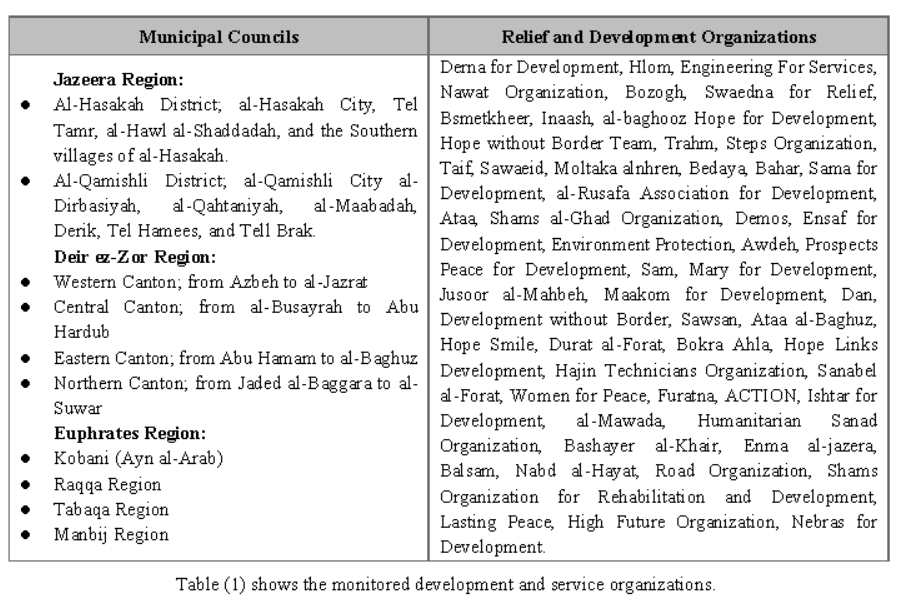
The objective of the early economic recovery report is to provide a comprehensive analysis of the activities of municipalities as well as foreign and local organizations in the region during the first half of 2022. By compiling other recovery reports from the opposition and regime areas, the combined reports seek to assess and investigate the following:
- Activities and projects implemented, the development of local economies, and the comparison of regions and sectors.
- Levels of a safe working environment that governing entities and decision-makers can create to increase job opportunities, business and production operations, and local demand.
- Legislation and administrative decisions and their impact on the local economy.
This report attempts to monitor and analyze the implementation of economic and development projects in various sectors. Accordingly, it induces decision-makers to direct the support and fill gaps wisely. Based on the updated administrative division of the region and according to the International Standard Industrial Classification, the report focused on main cities and towns with notable economic activity.
The report represents actual activities that took place based on public source information available as well as individual interviews conducted by field staff. It does not claim to reflect all activities that took place but those that were announced publicly. It monitored and assessed data from official social media accounts of municipalities and organizations that operate in the area by documenting their activities and public periodic reports, and utilizing specified monitoring criteria that enabled data analysis based on sectoral and geographical classifications.
II. Economic Recovery Indicators: Weak Strategies & Will
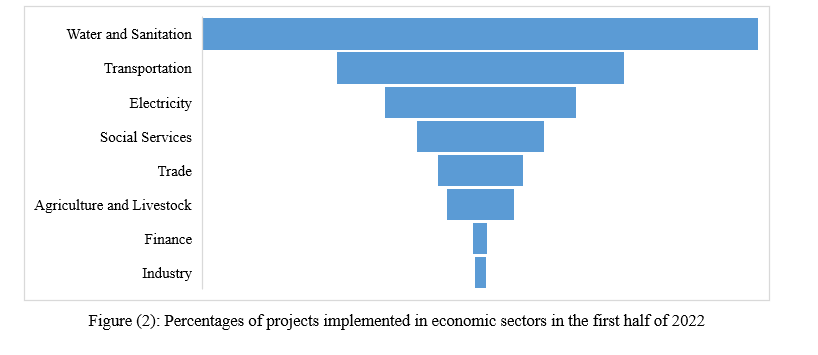
As indicated in Figure (1), the number of projects implemented in the various districts of the AANES was 358. As for the distribution of projects’ percentages, the water and sanitation sector topped the list with 148 projects (40%), followed by the transportation sector with 77 projects (21%). The electricity sector was ranked three with 51 projects (14%), and the social services sector came in fourth place with 34 projects (9%), as shown in Figure (2).
According to the geographical distribution of the monitored area, the largest percentage of projects was implemented in the al-Jazeera region 118 projects, followed by the Deir ez-Zor region 96 projects, Raqqa region 58 projects, Tabqa region 41 projects, Euphrates region 29 projects, and Manbij region 19 projects.
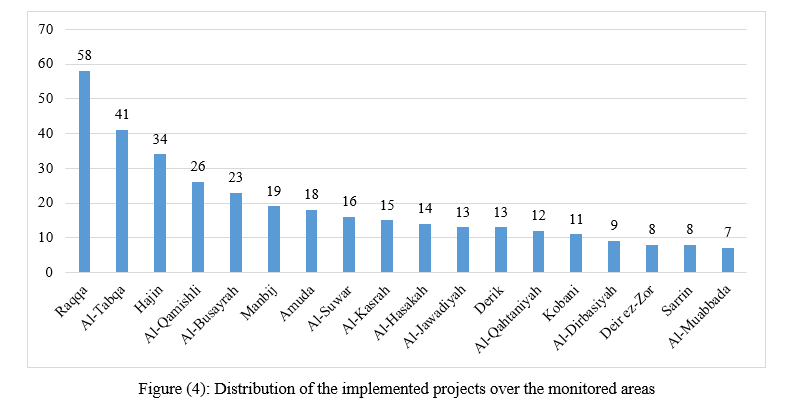
More specifically, Figure (4) displays the distribution of projects in the cities and towns monitored in all sectors. Markedly, Raqqa city ranked first with 58 projects, followed by the cities of al-Tabqa with 41 projects, Hajin with 34 projects, al-Qamishli with 26 projects, al-Busayrah with 23 projects, and Manbij with 19 projects.
 Water and Sanitation Sector
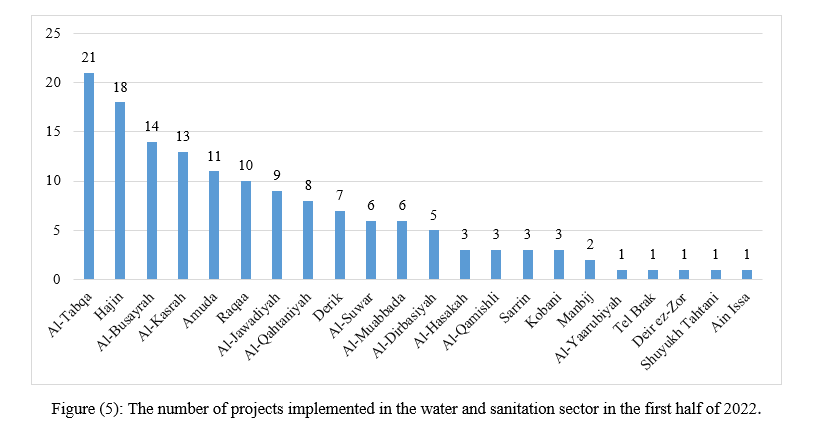
Out of 148 projects carried out, al-Tabqa city took the lead with 21 projects, followed by the cities of Hajin 18 projects and al-Busayrah14 projects, as shown in Figure (5). The projects included the installation of drinking water pipelines, with a length of 4000 meters, in the villages of Sarrin, Quroshan, and al-Murabba. There were also two other pipelines constructed: the first from the city of al-Busayrah to the reservoir of the village of al-Tukaihi (5,500 meters) and the second in the village of Abu al-Hassan (850 meters).
Other projects included expanding the water pipelines by 1150 meters in Hoti village, restoration of the water networks in the Kasra sub-district and al-Muhamida water station and establishing a new water station in al-Baghuz. However, the region suffers from several problems, the most significant of which is the lack of drinking water in the governorates of al-Hasakah, Deir ez-Zor, and Raqqa. For example, al-Hasakah city, which is inhabited by about a million people, suffers from constant water cuts caused by field disputes with the opposition factions in Ras al-Ayn, where Alouk water station operates.
The Alouk station delivers water to al-Hasakah at the rate of 60,000 m3/day, but the administration’s deliberate power cut disturbs its running. Russia has mediated between the two parties several times but all in vain. To compensate, the “administration” ran 16 desalination plants and transported water to homes through road tankers.
 Transportation Sector
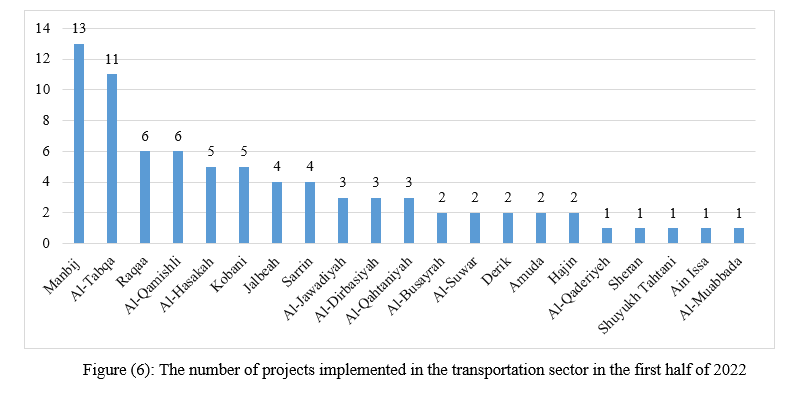
Seventy-seven projects were carried out in the transportation sector by municipalities and different organizations, with the cities of Manbij, al-Tabqa, Raqqa, and al-Qamishli taking the top four ranks, respectively. There were many projects of paving roads and restoration that took place in different locations of the monitored region, and here are some examples:
- Paving the highway between al-Hasakah and al-Dirbasiyah (20 km)
- Paving the road of the village of al-Jawadiyah in the Derik area of al-Qamishli (9 Km)
- Paving the roads of the Corniche, al-Hilaliyah, and the Western neighborhood
- Paving the road of al-Suwar city (10 km) and the restoration of its bridge
- Paving the street of Abu Hardoub in al-Busayrah
- Paving the road connecting the village of Taan and al-Sayed, Tel Houdan road (500 meters), Shajif Zahabieh village road (12450 meters), and al-Fars Abu Qalqal road (8300 meters) in Manbij.
- Road restorations in the neighborhoods of al-Sabbahiya, al-Tayyar, al-Jazeera, and al-Rumaila in Raqqa
 Electricity Sector
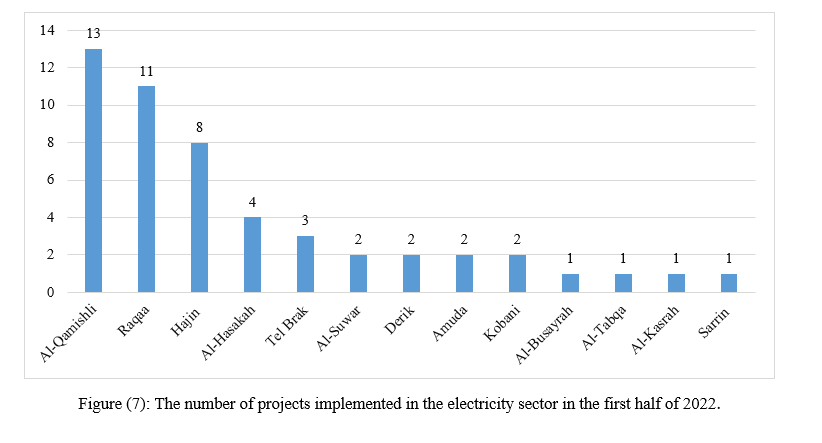
Fifty-one projects were implemented in the electricity sector, with al-Qamishli, Raqqa, and Hajin in the top three positions.
The works carried out varied to include the following:
- Installing a power transformer, five towers, and 13 wooden poles in Kobani
- Installing street lighting at the northern and southern entrances in Sarrin
- Installing street lighting in the towns and cities of al-Shaitat, al-Shaafa, Hajin, al-Baghouz, al-Suwar, Muhaimidah, al-Malahi, and the city of Raqqa
- Completing the project of the 7000 meters of lighting in the al-Nasrah neighborhood in al-Hasakah
- Installing 40 solar panels and four poles in several places in the city of al-Qamishli
- Installing new power transformers of 400 KVA and other ones with different capacities in many neighborhoods and villages
Nevertheless, people suffer from a chronic electricity shortage. In fact, they depend on the amperes, as the AANES provides diesel at a reduced price for neighborhood generators at 85 SYP per liter instead of 410 SYP.
The situation was exacerbated in al-Qamishli, with the “Administration” cutting off diesel from the generators that provide homes with electricity. In addition, many factories, industrial and commercial projects, and bakeries became out of work because the “Administration” blocked the diesel allocations assigned to the industrial and commercial sectors.
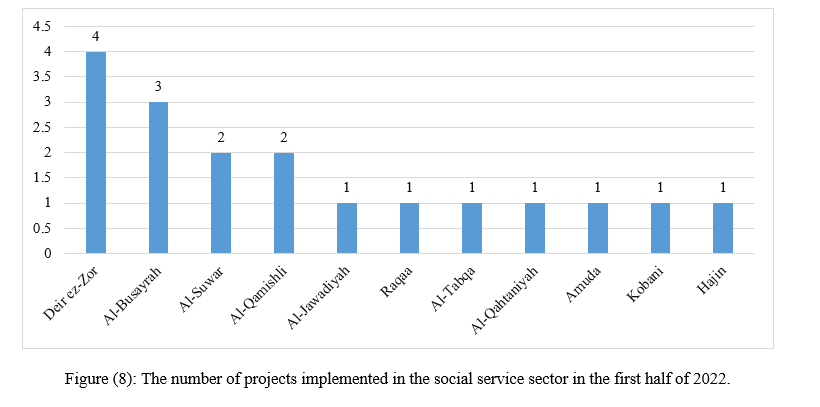
 Social Service Sector
34 projects were implemented in al-Tabqa, Deir ez-Zor, and al-Busayrah, including rubble removal for the cities' streets. Other projects were also completed in the monitored towns and villages and included the following:
- Building al-Bayram School in Manbij
- Establishing an agricultural land reserve (12,000 m2) near the Borzi Dam
- Constructing a development center in al-Dirbasiyah at the cost of $4211
- Opening two new Newroz markets in the Western neighborhood of al-Qamishli
- Restoration of a number of municipalities such as al-Dahla, al-Za'bar, al-Hussein, Jadeed Ekedat, al-Keshkiyah, and al-Tabqa
Although the AANES’s vision is to serve the interests of society by establishing economic institutions that are social in nature, the number of projects in this sector does not correspond to its stated goal.
 Trade Sector
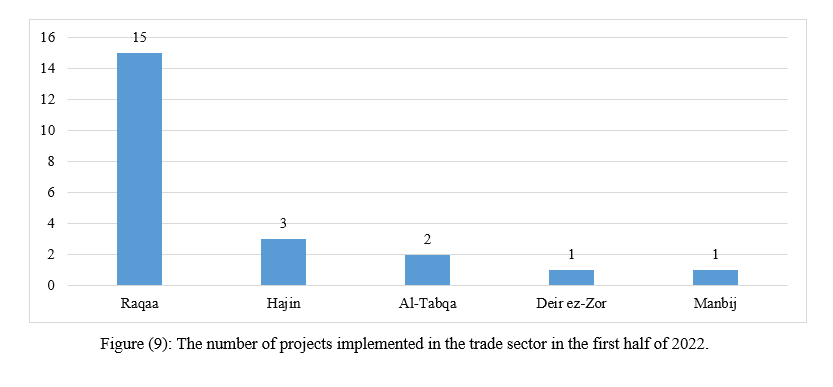
In the trade sector, 23 projects were implemented, with Raqqa coming in first with 15 projects. Other cities such as Hajin, al-Tabqa, Deir ez-Zor, and Manbij were also included in the list.
The projects included several commercial and economic activities and were as follows:
- Requesting price quotations for renting vehicles such as vans, tractors, and dump trucks
- Launching auctions for selling scrap iron and used oil
- Launching auctions for investing in the commercial market in al-Tabqa and shops filling in the al-Thakna neighborhood in Raqqa
- Conducting tenders to supply materials to the Public Works Department in Raqqa and Manbij
The difficulties in the trade sector are evident in the “AANES” areas with the closure of the border crossings with Turkey and the problems of securing locally made products that meet people's needs. Still, Turkish and Iranian goods are spread in the region through the Semalka crossing. The economic ramifications are enormous, especially with the increased monopoly of goods by the war's new elites and smugglers affiliated with the Kurdistan Regional Government of Iraq.
 Agriculture and Livestock
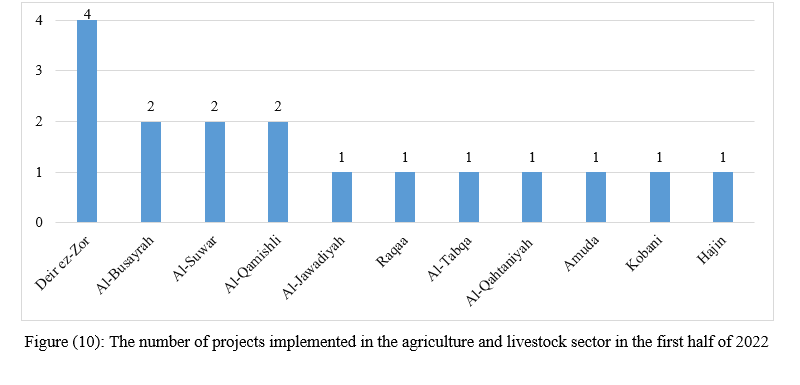
The agriculture and livestock sector had its share of the development plan, with a total of 18 projects completed. Deir ez-Zor came first with four, followed by al-Busayrah, al-Suwar, and al-Qamishli, with two projects each. The most important projects were establishing two farms of cypress and pine trees in the Mazkaft Dam Reserve, planting 3000 trees in each one, and supporting the camel, poultry, and livestock ranchers.
Until July, the Economics and Agriculture Board reported receiving about 360 thousand tons of wheat in Northeastern Syria and distributed 647,000 tons of fertilizer to farmers in Amuda.
During 2020-2021, landowners and farmers experienced great losses due to the high costs of fuel and fertilizers, drought, and high production costs. The corruption in the agricultural sector is linked to the illegal access that some individuals in the “Administration” have to subsidized water and farming materials, which forced many farmers to give up their lands to those with the most influence.
 Finance Sector
Four projects took place in al-Busayrah, Raqqa, and Deir ez-Zor. Supporting small and medium-sized enterprises and people with special needs.
And lastly 3 projects took place in the Industrial sector which are:
- Constructing a hose factory in al-Tabqa
- Starting a filling oxygen cylinders unit for hospitals and dispensaries in al-Qamishli
- Starting a plant for bottling drinking water in Amuda.
Administrative Decisions and Instructions
Several important decisions were made during the monitoring process including the following points:
- Preventing the wheat transfer within the administration's regions except by an official letter
- Setting the prices of wheat at 2.200 SYP/Kg, the ice block at 2000 SYP.
- Setting the price of an ampere of electricity by generators at 4000 SYP for subscribers of 6 amperes or less— generators running time is from 4 pm to 12 pm
- Adjusting the price of Russian phosphate fertilizer to $700/ton and nitrogen fertilizer to $730/ton by the Agricultural Society Development Company
- Obliging drivers to abide by the price set at 300 SYP within al-Qamishli
- Granting 100,000 SYP to every employee in the “Administration”
- Suspending the allocations of al-Baghouz and al-Shaab bakeries due to complaints
- Establishing a 25,000 SYP fine for anyone who violates the public hygiene rules (the Directorate of Environment in the al-Jazeera region)
- Specifying the amount of household diesel at 300 liters per month/ 150 SYP per liter (the Fuel Committee)
III. Concluding Analysis: Structural Inadequacy
The monitoring of the AANES region during the first half of 2022 indicated the following:
- Despite the completion of 358 projects in total and 148 projects in the water and sanitation sector, there is still an intractable crisis in ensuring drinking water to the residents of al-Hasakah city, with the lack of agreement or arrangements with the opposition factions in Ras al-Ayn.
- The decision to set a subsidized price only for registered cars encouraged the activity of the black market in which fuels are priced at five to ten times the regular market rate. Also, signing the oil refining and supply contracts with ‘specific people’ created a state of monopoly that had a negative impact on all sectors and citizens.
- The electricity sector suffers from crises that have forced people to rely on generators and amperes, not to mention the administration's unjustified cutting of the diesel supply.
- In the trade sector, the war elites and the influential people's control over the import and distribution of building materials may, over time, weaken the commercial structure and spread corruption.
- As for the agricultural sector, the weakness is apparent due to the lack of support for farmers and livestock ranchers, the spread of nepotism, and the intervention in distributing subsidized materials. It is noteworthy that the AANES region enjoys the most important strategic crops, such as wheat and cotton, and covers 43% of the total arable land of Syria (except for the Ayn al-Arab region).
- The administration's lack of financial defenses against crises imported from the regime's area, such as inflation, indicates weak governance in the financial sector and economic management. The absence of indicators and economic data was also one of the challenges that faced the monitoring and forecasting processes.
Based on the analyzed data, it can be concluded that the quality and the size of implemented projects and works in the AANES region indicate a structural inadequacy in the socio-economic model followed. Moreover, the AANES's various institutions and offices dealing with economic affairs did not contribute to the region's recovery or stability— despite controlling approximately 55% of the resources of Syria's GDP.
([1]) Original paper published on October 20, 2022, in Arabic,https://bit.ly/3T4S7IS
Early Economic Recovery in Opposition Controlled Areas between 2018 -2022
Introduction and Methodology
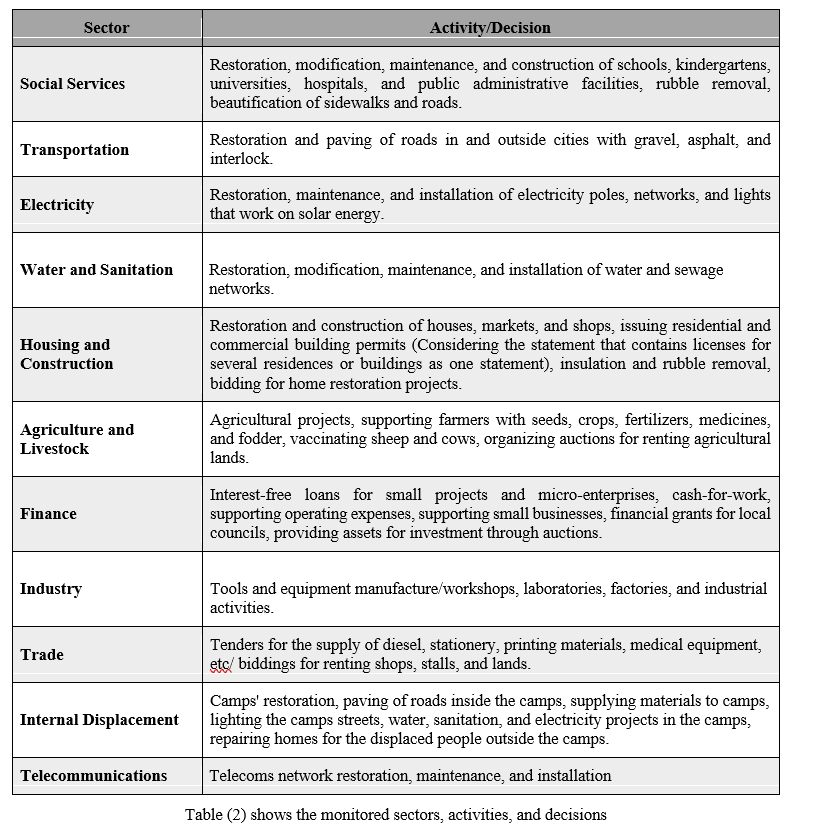
Early economic recovery aims to support local communities in returning to a stable and normal life, including preventing the community from returning to violence. The Early Recovery Report monitors projects implemented over a period of six months and is issued semi-annually, focusing on the main cities and towns in the "Euphrates Shield","Afrin" and Idlib governorate, which is witnessing remarkable economic activity, within 11 sectors which are: social services, transportation, electricity, water and sanitation, housing and construction, agriculture and livestock, finance, industry, trade, internal displacement, and communications.
The report relied on the official identifiers of local councils and organizations operating on Facebook and Telegram. The data was analyzed according to two levels, the first at the level of economic sectors, and the second by geographical level. Among the monitored areas in the countryside of Aleppo: Marea, A'zaz, al-Bab, Jarabulus, Akhtarin, Qabasin, Bza'a, Afrin, and Al Atarib. In Idlib Governorate: Idlib, Harem, Sarmada, Ma'arrat Misrin, Hazano, Salqin, Armanaz, Termanin, Atme, Al-Dana, Kah, Deir Hassan.
The report aims to analysis and understand the following:
- Monitor the dynamics of the activities and works carried out in the region, thus measuring the development of local economies, and comparing regions and sectors with each other.
- Exploring the ability of local and international actors to create a safe environment for living and working, and the ability of local councils to play a governance role and sign memoranda of understanding with companies and organizations that contribute to providing with the necessary projects.
Distribution of Projects According to Sectors
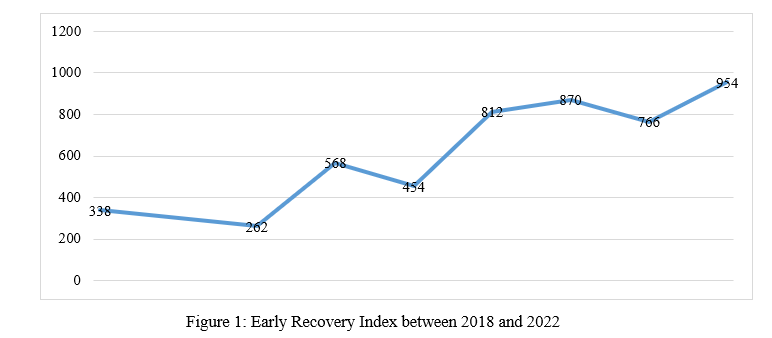
Overall, 5,024 projects were implemented in the countryside of Aleppo and Idlib between 2018 to 2022 through eleven economic sectors. The number of projects rose slowly with 338 projects in the second half of 2018 to 954 projects in the first half 2022 as shown in Figure No. (1) below.
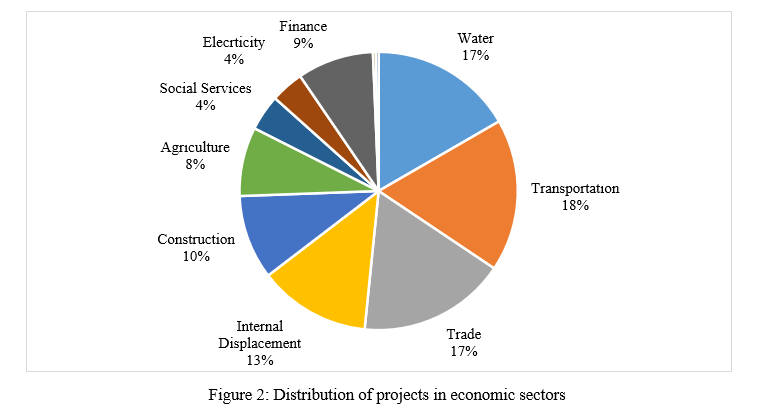
The highest percentage of projects were implemented in the transportation sector compared to the other sectors, as shown in Figure No. (2). These projects mainly contributed to the restoration of main and secondary roads destroyed by the war. These roads were vital to connecting villages and cities and facilitating civilian movement and trade. Water, sanitation, and trade projects came in second and third with 17% each, and the internal displacement sector ranked fourth at 13%.
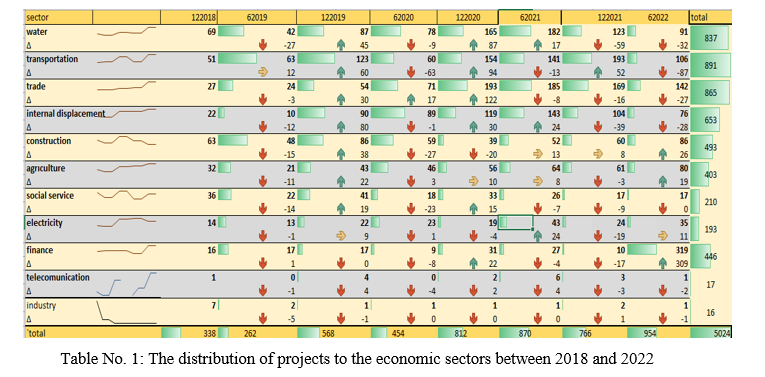
In more detail, Table No. (1) shows the sectoral survey on recovery projects during the observed period, where 891 projects were implemented in the transportation sector, 865 projects in the trade sector, followed by the water and sanitation sector with 837 projects. These projects were central to the recovery process in the region as they extended new water and sewage networks, repaired old networks, performed periodic maintenance, and repaired faults if they occur, such as paving roads, sidewalks, and commercial markets with asphalt and stone. Although these projects are still referred to as relief, they supported 1,293 camps, with a massive number of internally displaced persons, to access support and services. Projects related to construction were relatively low, around 487 projects were implemented, that included residential complexes for those displaced and the issuing of licenses for commercial and residential buildings. Agriculture projects were also lower, as farmers are reluctant to farm, there were only 403 projects during the observed period. The industrial, communications, and finance sectors are also suffering at the bottom of the index, due to the security situation and lack of investment in the region.
Distribution of Projects According to Regions
Figure No. 3 shows the distribution of projects between the countryside of Aleppo and Idlib between 2018 and 2022. The countryside of Aleppo had the largest percentage of projects with 55% about 2,757 projects were implemented in many towns and cities, most notably Azaz, Al-Bab, Afrin, Jarablus, Qabasin, Bza’a, Marea and others. The remaining 2,267 were executed in Idlib, Sarmada, Dana, Atma, Harem and others in Idlib governence.
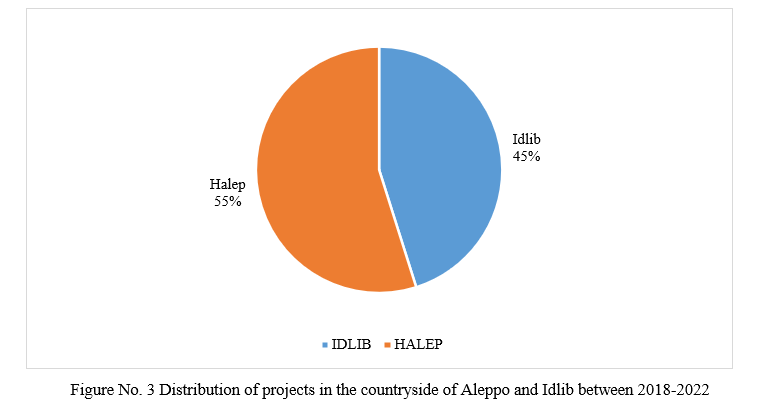
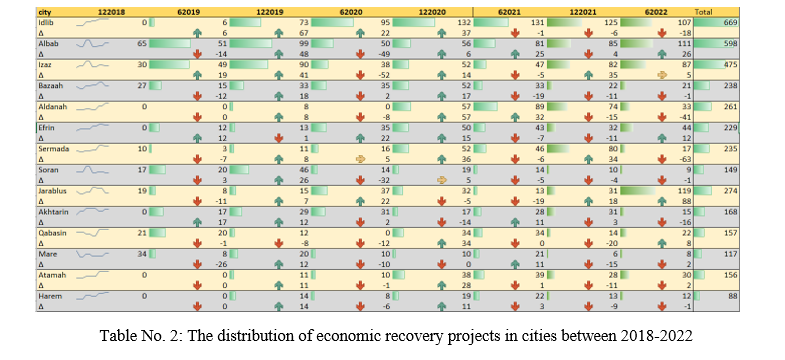
Table No. 2 shows the detailed distribution of projects at the level of towns and cities, where the city of Idlib appears at the top of the index with 669 projects, most of them in the sectors of internal displacement and trade. The city of Al-Bab, in the countryside of Aleppo ranked second with 598 projects in the sectors of housing, construction, trade, water and sanitation, and then Azaz with 475 projects in the sectors of water, transport, and electricity. A number of factors contributed to the discrepancy in the number of projects in cities and towns, including population density, displaced people and organizations, the centrality and importance of some cities before the revolution, the location of towns and cities on trade lines or near crossings, security situation, and lastly the concentration capital in some cities more than others.
Recommendations
Local councils and organizations have implemented important projects that pushed the early economic recovery process forward. Indicators of stability are also more apparent than before. With over four years of monitoring economic recovery activities, reports have highlighted the strengthened national negotiation papers while contracting investment companies to bring in investments. Furthermore, the industry, agriculture, communications, and finance sectors remain a significant challenge in the region’s recovery and attracting funds and investments. This is due to the lack of policies and laws necessary to enhance confidence in the local economy and products, the shortage of raw materials, high prices of raw materials, and the decline in purchasing power, in addition to the fact that the region remains trapped in relief projects.
Among the report's recommendations is to support local councils with good governance policies and implementation within each sector. This would ensure and support workflow, helping them be more attractive for investments. Support in the financial sector would revitalize the other sectors and create a comprehensive identity for the region within the agricultural and industrial sectors. As a result employment oppoturnities would increase, thus supporting residents with more jobs and a sustainabile livelihood.
The Potential of the Syrian Diaspora in the US to Invest in Northwest Syria
Executive Summary([1])
Ömer Özkızılcık
19.09.2022
The US announced a sanction exemption for twelve economic areas in specific territories of Syria controlled by the YPG and the areas controlled by the Syrian Interim Government – except Afrin. Within the same time frame, the Turkish government announced its eight-step plan to facilitate the voluntary return of 1 million Syrian refugees back to Syria. As these two overlap, the Syrian diaspora and its financial capacity to invest in NW Syria provide an opportunity for a win-win-win situation for all. Based on the 2014 census, this report elaborates on the Syrian diaspora in the US and looks further into examples of investments by this diaspora in NW Syria. The paper took three different examples of donations, large infrastructure projects in telecommunication, and housing projects for IDPs to measure the potential of investments from the Syrian American community in NW Syria. The next part of the report about potential obstacles and solutions was based on information gathered from six online interviews with eleven persons with knowledge about the Syrian American community, their investment potential, their demands, and their fears. In this manner, the report finds out mainly four areas of potential obstacles: security, law, financial infrastructure, and trust:
Security:
· External security threats and internal security concerns could be tackled by establishing industrial and employment centers as well as housing sites outside of the 15km range from the frontlines
Law:
· Law enforcement and the impartiality of courts are of serious concern for potential investors and improvement of law enforcement as well as the judicial system is required to increase investment potential
Financial infrastructure:
· Financial infrastructure provided by PTT is regarded as insufficient by investors, creates bureaucratic hurdles, and can lead up to a 6-8% loss of the investment money. A mechanism to facilitate money transfer into Syria like establishing bank branches in Syria is needed.
Trust:
· To establish trust, investments should begin with investment projects with an average value of $100 thousand. Furthermore, partnership of investors with Turkish businessmen should be facilitated and the establishment of a joint board tasked with reaching out to potential investors and aiding them in their investments has to be formed. A new mechanism should be introduced that allows investors to visit Syria with fewer bureaucratic hurdles and less economic costs.
Depending on how much of these suggestions are implemented, the Syrian diaspora in the US is estimated to invest in NW Syria $100-750 million over the next five years.
([1]) Original paper published on September 13, 2022, in Turkish, https://bit.ly/3DziK3M
Executive Summary([1])
Ömer Özkızılcık
19.09.2022
The US announced a sanction exemption for twelve economic areas in specific territories of Syria controlled by the YPG and the areas controlled by the Syrian Interim Government – except Afrin. Within the same time frame, the Turkish government announced its eight-step plan to facilitate the voluntary return of 1 million Syrian refugees back to Syria. As these two overlap, the Syrian diaspora and its financial capacity to invest in NW Syria provide an opportunity for a win-win-win situation for all. Based on the 2014 census, this report elaborates on the Syrian diaspora in the US and looks further into examples of investments by this diaspora in NW Syria. The paper took three different examples of donations, large infrastructure projects in telecommunication, and housing projects for IDPs to measure the potential of investments from the Syrian American community in NW Syria. The next part of the report about potential obstacles and solutions was based on information gathered from six online interviews with eleven persons with knowledge about the Syrian American community, their investment potential, their demands, and their fears. In this manner, the report finds out mainly four areas of potential obstacles: security, law, financial infrastructure, and trust:
Security:
· External security threats and internal security concerns could be tackled by establishing industrial and employment centers as well as housing sites outside of the 15km range from the frontlines
Law:
· Law enforcement and the impartiality of courts are of serious concern for potential investors and improvement of law enforcement as well as the judicial system is required to increase investment potential
Financial infrastructure:
· Financial infrastructure provided by PTT is regarded as insufficient by investors, creates bureaucratic hurdles, and can lead up to a 6-8% loss of the investment money. A mechanism to facilitate money transfer into Syria like establishing bank branches in Syria is needed.
Trust:
· To establish trust, investments should begin with investment projects with an average value of $100 thousand. Furthermore, partnership of investors with Turkish businessmen should be facilitated and the establishment of a joint board tasked with reaching out to potential investors and aiding them in their investments has to be formed. A new mechanism should be introduced that allows investors to visit Syria with fewer bureaucratic hurdles and less economic costs.
Depending on how much of these suggestions are implemented, the Syrian diaspora in the US is estimated to invest in NW Syria $100-750 million over the next five years.
The Security Scene in Sweida: Context and Expected Outcomes
After being accused of kidnappings, the regime-backed Fajer militia experienced wide-scale hostility from local Sweida groups and had their headquarters seized. This may signal growing discontent with the Syrian regime's role in Sweida's deterioration.
Background
Located in southwest Syria and home to over half a million people, Sweida province has become a refuge for internally displaced persons and its host population. Sweida is predominately composed of those who identify as Druze. Their religious and ethnic identity fueled their strong inter-community tie and unified front prior to 2011. In 2011, a visible divide surfaced in Sweida between those who remained loyal to the regime, those who supported the protest, and those who wished to keep the province neutral. The Syrian regime capitalized on the growing fear, proclaiming that only the Syrian regime could protect the Druze community from the majority takeover. Although a divide in political perspective exists, the tensions between the community in Sweida subsided.
Although the formal administrative governance structures are affiliated with the Syrian regime, the community has maintained partial independence. Unwilling and unable to open another battlefront, the Syrian regime has mitigated incidents to prevent growing opposition in the Druze community. Most Druze religious leaders guided the community towards a more neutral position to maintain ties and stability. Although some in Sweida prefer to remain in opposition to the regime or neutral, there are also those that actively proclaimed their loyalty to the Syrian regime, such as the notorious colonel Issam Zaher Eddin(2) or in establishing an independent militia, such as "Fajer(3)"
Sweida's demographic composition has allowed it to retain partial independence from the Syrian regime. Given Sweida's unique ethnic, religious and political dynamics, the Syrian regime has granted it partial independence. Among the oral agreements with the Syrian regime, is the halt to military conscription. Although unannounced and not formally publicized, young men in Sweida are not forcefully detained and conscripted. This compulsory military service requirement is implemented diligently in all other regime-controlled regions. This means that men in Sweida, as long as they are confined to the province's borders, will not be actively hunted and forced to battle fronts. This does not mean the regime has not tried to pressured men from Sweida to join the military.
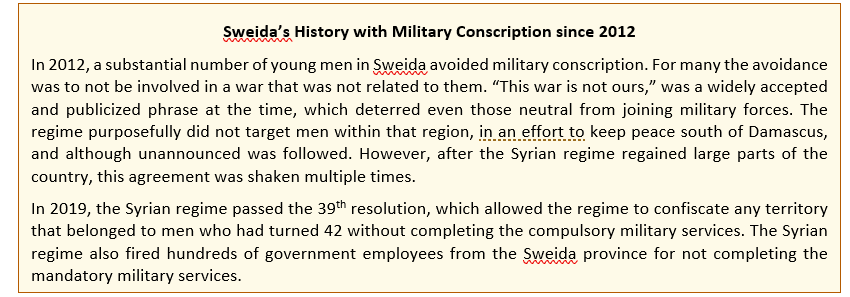
In negotiations with Sweida leaders, Russia, on multiple occasions, has presented the Dara'a scenario(4) to support regime military operations in the south, but the people of Sweida have been able to refuse with little repercussions. The hesitation by the Syrian regime to act directly and aggressively in the province, has also allowed citizens in opposition some freedom to express dissent. This includes protests, establishing civil society organizations, and relief non-profits.
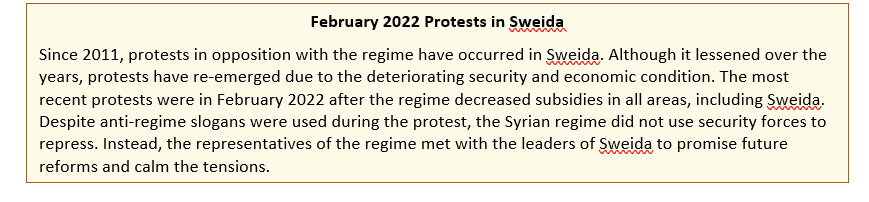
Although Sweida is a unique situation with partial independence, Syrian regime security remains widely present. The regime supported several loyal but independent militias and fueled the intelligence apparatus, and its leader Kifah Millhem(5) to continue surveillance of the region.
Recent widespread anti-regime sentiment in Sweida province has begun to unravel. The most recent revolt occurred in July 2022, the Druze leaders called for unity and attempted to expel the regime loyal, and Iran-backed, Fajer militia after suspicion of kidnapping civilians. Several of Sweida's local military groups united in 2018 under the name "Asharayan Alawhad" to maintain security. Iran-backed forces targeted this group through assassinations.
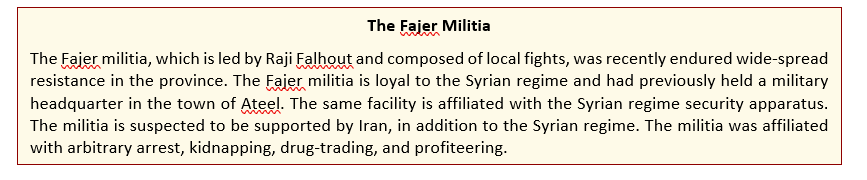
Residents of Sweida were already facing increased pressure due to the deteriorating economic and security situation, and local armed groups decided to react to Fajer militias' latest violation. After clashes and multiple deaths, the local groups that opposed Fajer surrounded their headquarters. Although Russia attempted to intervene, local groups claimed it was an internal issue and proceeded to its intensive response to Fajer militia's actions. Such resistance by local groups in Sweida may escalate, as tensions continue to rise from the economic and security deterioration.
Negotiations are expected with Russia's help to subside the recent tensions. It is expected that the Syrian regime and Russia will intervene to decrease tensions from rising in south Syria. Similar interventions occurred during a prisoner exchange with ISIS in July 2018. Tensions rose in Sweida, as they believed the regime was purposefully exposing them to ISIS attacks. To maintain the peace, the regime completed a prisoner exchange with ISIS to release civilian hostages from Sweida.

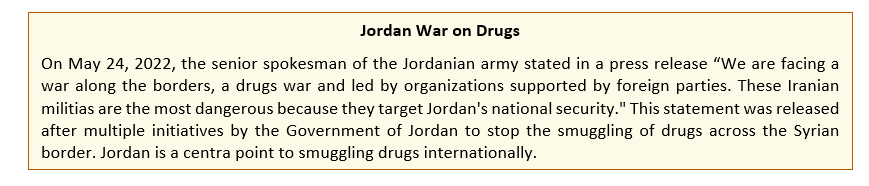
Drug trafficking in Sweida is a noteworthy contributor to rising resident opposition to Iran and regime-backed groups. Sweida has become a central region for Hezbollah and Iran to grow and trade drugs, with an intricate network internationally. According to in-depth reports completed by COAR Global(6) captagon(7) exports from reached a market value of 3.46 billion USD. Multiple local news outlets(8) in Sweida have reported on the drug crisis in the province, highlighting the many drug workshops present to produce captagon. Civilians from Sweida are recruited to work in the drug workshops, and a portion of the profits go to the Iran and regime backed militias to fund arms and vehicles. The Government of Jordan recently released a statement declaring war on drugs, showcasing the growing problem in the region.
Appendix A:
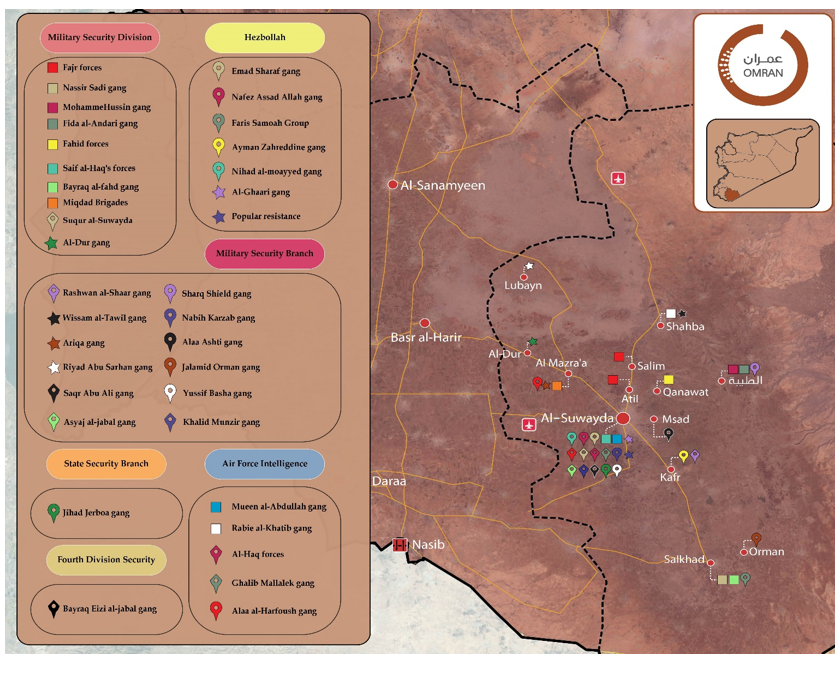
([1]) Original paper published on August 8, 2022, in Arabic, https://bit.ly/3wtvLaD
([2])Issam Zaher Eddin, originally Druze from Sweida, was appointed as a major general in the Syria Republic Guard. He played a major role leading many regime offensives.
([3])A regime loyalist militia group that is backed by Iran and is accused of abducting and sparking clashes with local groups.
([4]) In the Dara’a scenario, after regime invaded and conquered the territory from the opposition in 2018, Russia proposed an alternative to the security structure. Instead of forcefully conscripting the young men in the region to join regime military and battle fronts, Dara’a created its own military group “5th Falaq group” to support regime security.
([5]) Appointed in March 2019, Kifah Millhem was appointed by the Bashar Al-Assad as the new chief of the Military Intelligence Directorate. He is suspected to be responsible for the deaths of thousands and a war criminal.
([6]) https://coar-global.org/2021/04/27/the-syrian-economy-at-war-captagon-hashish-and-the-syrian-narco-state/
([7]) Captagon is a manufactured drug that acts as an alternative to amphetamine and methamphetamine
([8])الجيش الأردني يقتل 4 أشخاص ويحبط تهريب كميات مخدرات كبيرة آتية من سوريا, 2022 May 22, https://www.alquds.co.uk/الجيش- الأردني- يقتل -4- أشخاص
Governance in Post-2011 Syria: Challenges & Opportunities
Omran Center for Strategic Studies, Istanbul Medipol University Center for Mediterranean Studies (AKAM) and Black Sea Strategic Research Association (KASAM) are pleased to announce the international conference titled “Governance in Post-2011 Syria: Challenges & Opportunities” which will take place at Istanbul Medipol University, November 15, 2022. The conference will shed light on the reality of governance and its emerging models in Syria, in addition to addressing the changing dynamics and their future repercussions on the country under the current conflict conditions.
We will be accepting proposal submissions in English, Arabic and Turkish until September 10, 2022.
For more details:
Proposal form link:https://bit.ly/3S2y9i2
Participation standards and required conditions: https://bit.ly/3BagD5u
Anuual Report 2021
Established in 2013 in Turkey with presence in Syria, and an office in Washington, DC.
Publishes in-depth studies, analytical maps, and policy recommendations on Syrian and regional security, politics, economics, and local governance.
Hosts conferences, workshops, and seminars, bringing together scholars from around the world.
Omran's Impact
Through continuous engagement with public opinion and decision makers, providing a range of solutions and policies that drive political change and stability.
Social Engagement
- Reaching approximately 732.409 people interested in Syrian affairs on social media platforms.
- Interacting with 44 local, regional and international media outlets to inform the public on Syrian affairs.
- 26 institutions have republished Omran’s work as a major source of information.
- 12,047 people engaged in meetings and dialogues
- 12 agencies republished outputs of Omran, while 31 local and international institutions relied on the center’s outputs as a main source for their published materials.
- 109 field meetings and activities inside Syria with local activists, including Ihsan’s protection centers, Local Councils and Chambers of Commerce and Industry.
- 40 local, regional, and international media organizations engaged with the aim of informing the public on the developments and events of the Syrian issue.
Engagement with Decision Makers
- 61 events with local activist's networks, Syrian NGOs, civil society organizations, lawyers, military experts, and scholars.
- 28 research meetings with Arab and international research centers and think tanks.
- 117 meetings/events with representatives of local, regional, and international states and political figures.
Research Collaboration
- 28 research products published by Arab and international intellectual institutions.
- 18 research consultations for researchers and students working on Syria.
- 66 workshops in collaboration with research centers, institutions, and other parties.
Dr. Ammar Kahf | How important is the conflict in Syria to the EU?
Dr. Ammar Kahf, executive director of the Omran Center for Strategic Studies, commented on the Brussels donor conference, saying, "The pledges were better than expected, except that the focus was always on the aid approach rather than the systematic empowerment approach that the Syrian people need to create more jobs.
For More: https://bit.ly/39vJMvY
Normalizing with the Assad regime, Different Approaches at Different Levels
From the beginning of the Syrian uprising, several Arab countries were almost unanimous in isolating the Syrian regime to punish it for its violations of Arab League resolutions and the rights of the Syrian people. This approach was translated by Qatar’s leadership in the Arab League and the important support of Saudi Arabia and post-revolutionary Tunisia and Egypt into a resolution that led to the suspension of the regime’s membership in the Arab League in November 2011.
In the following years, most Arab countries called on the regime to stop military operations against civilians, and some of them even played a greater rolein actively seeking regime change in diplomatic manners and by supporting and financing the opposition. However, in the coming years, political changes occurred in some Arab countries such as in Egypt and the United Arab Emirates, causing a departure from regime change politics to the restoration of pre-Arab spring MENA security order, thus affecting the regional attitude towards the Syrian regime.
Egypt resumed consular relations in 2013, when most Arab countries took a stand against the Syrian regime, but has not fully normalized its relations with the regime to date. This shows that Egypt prioritizes the stability of the Syrian regime in its foreign policy, as Egypt distrusts the opposition and considers it a proxy for Turkey. Moreover, Egypt prefers to work with the army and considers it more reliable.
The UAE and Jordan, on the other hand, were on the opposite side and supported the Syrian opposition to varying degrees, but after the Russian intervention in 2015, the situation on the ground had changed, which, along with other factors such as the UAE’s attempt to counter Turkey and contain Iran with a different approach in Syria, led to a change in the countries’ priorities in their foreign policy toward Syria. In 2018, the UAE and Bahrain reopened their embassy in Damascus and resumed relations with the Syrian regime. The UAE wants to normalize its relations with the Syrian regime in order to have relations with all parties on the ground.
Similarly, when the Syrian opposition lost control of southern Syria in 2018 and signed reconciliation agreements, Jordan reopened its border with Syria with some restrictions, as it had done before 2015, Jordan has not completely severed relations with the Syrian regime, but it has downgraded its representation. It normalized its relations only in October 2021 after a telephone conversation between King Abdullah and Bashar al-Assad, which was expected after King Abdullah’s speech on CNN during his visit to Washington and after his meeting with President Biden.
Looking at the factors behind this action, the first one seems to be the economic factor, because the country is in a difficult economic situation, aiming at normalization and cross-border trade, as the Arab gas pipeline will help the Kingdom’s economy. In addition, the security factor is not as important as the economy, but it plays a role because the Kingdom is concerned about stability on its northern border and normalization will help in security coordination with the Syrian regime to prevent possible threats.
2021, the beginning to regime regional re-integration
In the last quarter of 2021, more precisely on November 9, 2021, the Foreign Minister of the United Arab Emirates, Abdullah bin Zayed, visited Damascus as the highest UAE official since the beginning of the Syrian uprising in 2011. The visit came at a time when the idea of normalizing relations between Arab countries was discussed among Arab officials, and some expressed this on various occasions. In addition, Jordan’s King Abdullah spoke to Bashar al-Assad by phone in October last year, removing doubts about relations between the two countries.
At the same time, Egypt, which has maintained close relations with the Syrian regime in recent years, has not yet fully normalized its relations. So, if we look at the approach of each country, we can examine the differences between these three actors in the region-Egypt and the UAE, Jordan-in terms of timing and level, as well as their advocacy for the Syrian regime. Timing shows how long these countries have been linked to the regime, while level shows how deep these links are. Advocacy shows which countries are committed to the regime’s return to the Arab world.
As for the level, not all countries that normalize with the regime do so to the same degree. Egypt has played a role in supporting the Syrian regime, although it has not yet fully restored its relations with the country. There are several reasons for this, such as the desire to maintain relations with the Gulf States, as they have led the front against the Assad regime.
Egypt’s main objective is to view this relationship from a political and security perspective. The UAE, on the other hand, is looking at the relationship from an economic and political perspective. They want to participate in the reconstruction process in the coming years. Therefore, its normalization process with the Syrian regime has taken place without any conditions.
Although it has not severed its relations with the regime, Jordan has taken positions close to the Syrian opposition over the past decade, but has kept its border open with the Syrian regime for economic reasons. The Kingdom believes that normalizing its relations with the regime will help its economy recover and that it wants to play a role in resolving the conflict. Jordan has also sought to reactivate the bilateral agreement with Syria on various issues such as water. It also wanted to reactivate the Arab Gas Pipeline to reach Lebanon through Syria, which is part of the kingdom’s ambitions to become an energy hub in the region.
What sets Jordan apart, however, is that it is not only Jordan that wants to engage with the regime, but also brings along other countries that have the same idea of changing the regime’s behavior through concessions and vice versa. It is an approach that has met with the approval of the Biden administration. As part of its strategy to manage the Syria conflict by focusing on changing the regime’s behavior rather than regime change, this administration’s new approach to Syria is the opposite of the previous administration, which pursued a policy of maximum pressure.
In March 2022, another important UAE rapprochement with the Syrian regime took place, namely Bashar al-Assad’s visit to the country. This visit is considered very significant, mainly because it was al-Assad’s first visit to an Arab country since the beginning of the uprising. The visit can be analyzed from various points of view, such as future investments, the possibility of the regime’s return to the Arab League, and Iran’s influence.
The possibilities of reinstating the Syrian regime in the Arab League
In terms of support for the Syrian regime, not all of these countries are equally committed to Syria’s return to the Arab League in order to normalize the country’s relations with the world, but we can see some differences. In late January this year, Arab League Secretary General Ahmed Aboul Gheit said that Syria’s return to the Arab League was not discussed at the consultative meeting of Arab foreign ministers in Kuwait. He later added that Syria’s return to the Arab League depends on consensus among Arab countries. These are indications that a return is unlikely at the next summit.
The irony is that Egypt is playing a role in the Syrian regime’s return to the Arab League but has not yet fully normalized its relations with the Asaad regime, which could happen in the near future. As mentioned earlier, Egypt sided with the Syrian regime under President Abdel Fattah al-Sisi, and the two countries have since restored consular relations.
The UAE changed its stance on Syria after 2015 until it normalized its relations with the regime. After that, they began to support the Assad regime and promote the normalization of their relations with other countries in the region. They went even further by calling for the lifting of sanctions imposed on Syria.
In Jordan, however, we see a different approach that accepts the current status quo in Syria as a reality. For example, Jordan does not fully side with the regime in the Syrian conflict, but rather seeks to benefit from the opening of its relations with the Syrian regime on an economic level and restore the situation to what was before the border between the two countries. In doing so, it advocates its approach to Syria “step by step” as a comprehensive plan for dealing with the regime.
Ultimately, these approaches are similar in some respects, but they are not identical. This means that not all of the approaches these countries are taking have the same goals. Moreover, not all countries approaching the Syrian regime can be considered allies of the regime; rather, it is about their needs.
Finally, these approaches are similar in some respects, but they are not identical. This raises the question of which of these approaches will be successful and how this will affect the situation on the ground. To what extent these approaches will be able to bring the Syrian regime back to the Arab League.
So far, these approaches have not been able to change the position of Riyadh and Doha in terms of normalizing relations with the Syrian regime, which may show how effective these processes have been so far. On another level, will the relations between the Syrian regime and the international community remain the same? Will we see some changes in the position of some countries like the U.S., or could other approaches be taken?
The Autonomous Administration: A Judicial Approach to Understanding the Model and Experience
As the central state authority declined, in favor of the emergence of sub-state formations including ethnic and religious ones, along with international and regional interventions, several local governance models have emerged across Syria as reflected by the dynamic military map. This led to the disappearance of some models and the decline of others, whereas other models achieved relative and cautious stability. In this regard, the “Autonomous Administration of North and East Syria” falls within the last category as it developed through several phases until it reached its current model. Although many years have passed since the actual declaration of the Autonomous Administration with its various institutions and bodies, the level of governance and nature of administration in these institutions and bodies remain problematic and questionable. Thus, this study seeks to explore the nature of the administration and the level of governance in this developing model using the judicial authority as an entry point, as it is considered one of the most prominent indicators. The impact of court processes is not limited to the judicial field, nor does it reflect the legal interest alone; it also offers several indicators on the political, administrative, security, economic, and social levels. Therefore, the study examines the judiciary system of the AA, its structure, various institutions, legal foundations, in addition to the employees working in and running those institutions and their qualifications. The study also attempts to explore the effectiveness, efficiency, and working mechanisms of this system, as well as its impact on North-Eastern Syria, in addition to the complex problems in that region (political, tribal, ethnic and “terrorism”).